21 January, 2011

Conveniently Ignoring Vidarbha

A D-Day or rather a T-Day in the political history of Andhra and Telangana, was marked on 9th December 2010 when the Central UPA government agreed to take further the demands of a separate Telangana state to be carved out of North Andhra region. This, coming weeks after some intense and often violent agitation by members of the TRS party workers, Osmania University students and people & students from elsewhere in the districts representing the Telangana region. The period of turmoil marked burning of public properties, damaging malls and private establishments, roadblocks, rallies, suicides, stopping trains, gate-crashing into assembly and virtually holding the state government to ransom as well as putting the common man in the city of Hyderabad and elsewhere into great inconvenience and continuous threat. Result; Government bowing down to the pressure and agreeing to set up a Panel under Sri Krishna Commission to discuss the viability of a separate Telangana state. Although after 12 months of the farcical process wasting exchequers time and money they submitted a report which had nothing path-breaking or possible solution for the cause. The bone of contention being the city of Hyderabad, with both Telangana and Andhra unwilling to let go of the city, which has seen tremendous development on all fronts in the past decade and is the major revenue source for the state.
The reason for presenting this as a prologue to the subject of the topic is that, perhaps this could very well serve as an ingredient or war-plan for the people of Vidarbha, who have a deep yet un-ignited aspiration to see an independent state of Vidarbha. Also unlike the contentious issue of state capital, Vidarbha is well served with Nagpur as its unanimous capital city, bejeweled with all attributes befitting the citadel of an independent state. The culturally and socially peace loving people of Vidarbha have remained much calmer during the communal troubles than the rest of India, and have not been very vocal or effusive in their support for a separate state. Unlike some smaller states which were carved out during the last decade based on language or political situations, a separate Vidarbha state is justified not only because of if continuous abandon by the rest of Maharashtra but also for its distinct demography, culture and need to develop and establish a distinct identity.
In recent times, there have been few calls for a separate state of Vidarbha, due to the continuous apathy from the Government of Maharashtra towards this region and the inept and opportunistic political leadership in Vidarbha. Though being culturally, politically and financially diverse than the rest of Maharashtra, the calls to a separate state come in picture only when the leaders from this region are marginalized by the other higher authorities in the state government or at the time of elections. The selfish leaders of Vidarbha have been raising this issue to bake their own bread, often pressuring the government for getting a cabinet seat in the Maharashtra assembly or to get some plum portfolio from wherein they can fill their coffers. A major antagonism for the cause of Vidarbha has come from Shiv Sena, who does not want their influence to be confined only to the Western Maharashtra and Konkan, as well as to counter the MNS who have not found many takers amongst the peace loving people of Vidarbha. Even top leadership of NCP has been ignorant about the plight of the region and its demand for severance from Maharashtra.

The earliest dated demand for a separate identity for Vidarbha statehood has been noted as long back as 1905 when the Maha Vidarbha movement was voiced for separation from the CP & Berar region. However since there have been but a few and unheard voices being raised for a statehood. Votaries for Vidarbha find their most forceful argument in the recommendation of the State Re-organization Commission under Justice Fazal Ali (Para 8 of the Commission's report of 1955) which favored "an independent state of Vidarbha" for it to become "fully self-reliant and viable". Promises to grant Vidarbha more than its share, made in the Nagpur and Akola pacts, have been empty ones. In 1971-73 the agitation was at its peak when Jambuwantrao Dhote had undertaken a 21-day fast to highlight the cause. He was later elected to the Lok Sabha as an Independent candidate on the same plank and on that achievement the issue subsequently went down the cold basket. The Dandekar committee on regional imbalances noted in 1980 that the per capita development expenditure was Rs 222 for Mumbai, but a mere seven rupees for Vidarbha. Also, while per capita crop loans of Rs 76 were distributed to farmers of western Maharashtra, those in Vidarbha received only Rs 22. Many of the 125 irrigation projects planned for the region remains incomplete and only eight per cent of the total area is irrigated. The situation has only further worsened in the recent past. The imbalance continues on the industrial front too. The growth in employment between in western Maharashtra was significantly higher than in Vidarbha, in spite of the fact that the region has more than 60 per cent of the forest wealth and 80 per cent of the mineral wealth of the state and produces more than half of states share of generated power. Clearly, these disparities are fuelling public sympathy for a separate state.

In recent past leaders like Satish Chaturvedi, NKP Salve, Vasant Sathe, Banwarilal Purohit, Ranjit Deshmukh, Sharad Joshi, among others have been vociferous in support of Vidarbha state, but the issue raises its head only during the elections and once the leaders get their desired positions the demand gets dumped for another 5 years. Few of the leader’s in-spite of holding major and influential positions in the State & Central Government and their respective party working committees, have not been able to do anything worthwhile for the regions cause. Shetkari Sangathan, Vidarbha Rajya Party, Vidarbha Rajya Nirman Congress, Swatantra Vidarbha Rajya Samanvay Samiti, Vidarbha Sena, Vidarbha Parishad and Vidarbha Rajya Congress Steering Committee any many other vote garnering parties were formed over the time but all of them failed to have any impact on the Central Leadership to press for the demand. And people of Vidarbha too, sensing their opportunistic agenda didn’t show any enthusiasm in supporting the personal motives of these parties for the separate Vidarbha’s cause. Vidarbha has given many important leaders to the country from our present President Pratibha Patil (from Amravati) to erstwhile Late Prime Minister Narsimha Rao (represented Ramtek Lok Sabha constituency), and has been one of the important citadels of the Indian Freedom Movement be it in Nagpur or Sewagram, but the region has been always been given a step-motherly treatment by political parties on the national scale. The issue came to light when Salve and Sathe resigned from Congress party upon receiving a negative response from Sonia Gandhi on the demand to bring up the statehood of Vidarbha, but even this move was no more than a ploy by the leaders to bring the spotlight upon their dwindling political career rather than the gross adversities and neglect being faced by the people of the region.

Separate Vidarbha – Viable and More
Vidarbha occupies 31.6% of total area and holds 21.3% (over 26 million) of total population of Maharashtra. Situated in central India Vidarbha has its own rich cultural and historical background distinct from rest of Maharashtra. A majority of Vidarbhites speak Varhadi a dialect of Marathi and Hindi. The region is famous for growing oranges and cotton. Vidarbha holds two-thirds of Maharashtra’s mineral resources, three quarters of its forest resources and is a net producer of power. Vidarbha generates around 3600 MW power through the thermal and hydro-power plants at several places, with Chandrapur Super Thermal Power Station (CSTPS), being one of the biggest in Asia. Still, there are the daily power cuts in the region for 5-8 hrs in towns and 10-12 hrs in the rural areas of Vidarbha, while the people of Mumbai, Thane and Pune continue to enjoy 24 hours of uninterrupted power supply to cater to their extravagant lifestyle. Recently a study conducted by the Times Group pointed out the gross injustice and health risk being meted out to people of Vidarbha, in terms of air and water pollution through a deliberate and meticulous plan for power generation set-up. While the polluting and heat generating sources of electricity vis-a-vis the thermal power plants numbering more than 47 are being planned to be setup in Nagpur-Chandrapur-Yavatmal belt, which aleady has established and significant number of coal based thermal power setups, sufficient for the region. This the study pointed out will lead to large amount of particulate matter and other air pollutants being released in the atmosphere of the region, putting the health of people and animals at risk. The effluents released by these power plants will also cause huge amount of soil and water pollution thus indirectly affecting the agricultural produce of the nearby regions and also diverting a huge quantity of irrigation water to these gas guzzlers in an already draught prone region. This being done, when simultaneously much cleaner sources of power generation being planned in Konkan and Western Maharashtra region, like Nuclear and Hydroelectric based power plants. People of Vidarbha are at loss to decipher such step-motherly treatment being meted out to them regularly in the name of pseudo-development. The much vaunted Model Solar City project for Nagpur city is yet to see sunlight, for which 2012 has been marked as the deadline. In the end again citing lack of resource and funding in Nagpur, these corrupt power-mongers of Mumbai will shift the project to either Pune or Nasik or some remote ghetto of Konkan in the name of development.
Agriculturally too Vidarbha has been self sustaining, with cotton, oranges and soya beans being the main cash crops. The Orange city - Nagpur and Amravati are the largest Orange growing regions. Traditional crops as jowar, bajra and rice are grown and exported extensively from the region, with Gondia being the largest rice growing district. However, recently Vidarbha region has become infamous for a large number of farmer suicides occurring. The farmers in the region are living in the worst condition compared to the rest of India. There have been more than 32,000 farmer’s suicides in Maharashtra in a decade, of which 70% being in the 11 districts of Vidarbha region. The figure has been 892 in 2009, with approximately 95% of the cotton growers of Vidarbha under massive debt. This is mainly due lack of ample amount of water resources, lack of new technologies or proper financial aid or debt schemes by the ministry and due to the negligence of the state govt. towards the farmers needs. The main crop in Vidarbha being Cotton, but the farmers growing it don't get their share from the govt., which has lead to the high distress among them, leading to the massive suicides. Due to the absence of any responsible counseling either from the government or society there were many farmers who did not know how to survive in the changing economy. Such stresses pushed many into a corner where suicide became an option for them. This also led the farmers and others in this region to make a call for a separate Vidarbha state. The recent fiasco of Rahul Gandhi and his patronizing a widow Kalavati; whose husband committed suicide, brought the plight of farmers of Vidarbha in national picture, resulting in the PM announcing a grand relief package for the riots. But as with the earlier declared or promised measures this too remained either only on paper or money never reaching the sufferers.

The Chandrapur, Gondia, Gadchiroli, Bhandara and Nagpur Districts form the main mineral belt, with coal and manganese as the major minerals. Chandrapur district alone contributes 29% of all mineral output of Maharashtra. Iron ore and limestone are identified as potential mining resources. Though rich in minerals, coal, forests and mountains, this region is always underdeveloped because of the continuous dominance of the political leaderships form the other parts of the state, especially Western Maharashtra. Traditionally Vidarbha has lagged way behind Western Maharashtra in industrial growth. Various incentives were granted to attract industries but have failed mainly due to an indifferent attitude of the politicians. Butibori Industrial Area MIDC outside Nagpur is one of the largest industrial areas in country but few industries have actually opened there as there were no promotional schemes neither there have been any and tax incentives being granted to attract investments, unlike the Mumbai-Pune-Nasik belt where government has gone head-over-heels to help foreign industries to set up their establishments. Neither has there been encouragement for heavy industries to establish setup in the region apart from few Cement industries in Ballarshah and Chandrapur. The major textile mills in Nagpur and nearby areas have died a slow indifferent death, as they found no patronage from amongst the major industry brands nor the willingness of the political parties, in-spite of Vidarbha being a major cotton producing region.

MIHAN an international cargo hub project is currently underway at Nagpur. The project aims to exploit the central location of Nagpur and convert the present airport into a major freight hub with integrated road and rail connectivity along with a Special Economic Zone. However the project has been plagued by long delays and policies and is progressing at such laggardly pace that the people of Vidarbha and Nagpur in particular who are working in companies and industries in various parts of the country have lost hopes of ever returning to their homeland and settle there. Even the IT industries have shown a marked neglect towards investment in Nagpur as a potential amongst the Tier -2 segment for IT and ITES sector. Apart from the entrepreneurial ventures by Nagpurian’s in form of Lambent Technologies, Infospectrum, etc and few others as Persistent Tech and Premier Tech, there are hardly any names to boast of in terms of Software companies in Nagpur. Although there have been major investments by Satyam, IBM, HCL, TCS in terms of land acquisition in Nagpur, but the intentions and urgency to bring up a likely Developing Center anytime soon has been poor, compared to the cities of Jaipur, Indore, Chandigarh, Cochin, etc which too were marked at the same time as Tier-2 targets and are developing at a very fast pace.

Nagpur is an important city for the scientific community as it is headquarters of number of national level scientific and governmental establishments like the National Environmental Engineering Research Institute (NEERI), Central Institute of Cotton Research (CICR), National Research Centre for Citrus, National Bureau of Soil Survey and Land Use Planning, and the Jawaharlal Nehru National Aluminium Research and Development Centre. Nagpur is also an important city for the Indian armed forces. The city is the headquarter of Maintenance command of Indian Air Force. The Indian Army's Ordinance factory and staff college are located on west side of city. Nagpur’s suburb Kamptee has cantonment of Regimental center of Indian Army’s Brigade made up of National Cadet Corps’ Officers’ Training School, Institute of Military Law and other establishments. Nagpur’s National Civil defense College provides civil defense and disaster management training to pupils from all over India and abroad. Indian Air Force’s giant IL-76 transport planes nicknamed “Gajraj” are based in Nagpur.

Tourism too has a major industry prospective in Vidarbha which has lush green deciduous forests, home to a variety of flora and fauna. These attract a large number of visitors each year. All of Maharashtra's tiger reserves are located in Vidarbha. They are Melghat Tiger Reserve, Tadoba Andhari Tiger Reserve and Pench Tiger Reserve. Nagzira wild life sanctuary and Navegoan Bandh National Park (bird sanctuary) are also very popular. The Tadoba is Maharashtra's oldest National Park created in 1955, spanning 575.78 sqkm, one of India's 25 Project Tiger Reserves. The Satpura mountain range in Amravati and its beautiful surroundings in Chikaldhara, the major spots of attraction as Ramtek and Khindsi, Pench Dam, Deeksha Bhumi, Tajbagh, Sitabuldi Fort in Nagpur, Kanhan and Waingangā rivers have seen people crowd these places during holidays and weekends. All in all Tourism can be a major economy in Vidarbha if properly addressed and developed.
The city of Nagpur the largest of Vidarbha has every potential of become a state capital having a special civic body, the Nagpur Improvement Trust, which along with Nagpur Municipal Corporation is responsible for overall development and planning activity. Other significant cities like Amravati and Akola too have their own municipal corporation. Urban areas are split in different wards and each ward elects a representative. Rural areas have a Panchayat raj system. Vidarbha is represented at national level by 10 Lok Sabha seats and 62 assembly seats at state level, which is significant when compared to some of the very small states of India hardly representing 3-4 Lok Sabha and are stretched to make up 40 minimal assembly seats to constitute a State Legislative Assembly. As part of the Nagpur pact the winter session of Maharashtra assembly is held as Nagpur Vidhan Bhavan (although it has become a farce and a mockery of exercise by the ministers and elected members, with the number of days of active session dwindling continuously and without any meaningful outcomes). The city of Nagpur has its own and unique Nagpur Bench of Bombay High Court apart from the District Court to address the issues.
Vidarbha has seen enough of disregard for its right to a separate and respectful identity. It has always been sidelined economically compared to the rest of Maharashtra and has been plagued very much by poverty and malnutrition. People have waited patiently and have seen their trust betrayed by their so called elected leaders. As in case of Telangana, it is now up to the common man, the students and business class to unite and fight for a common cause to realize their dream of a separate state of Vidarbha. “Jai Hind. Jai Vidarbha.”

13 August, 2010

A Brush with History

Rising 400 feet above the ground level, I was exuberating with joyous accomplishment, while through my sub-conscious mind I could hear Qilich Khan enthusing his army and lead the charge; the canons booming and the galloping horses up the treacherous mountain path leading up to what is called in Telugu as the Shepherd Hill or the “Golconda”. Over 300 years had passed since the famous Granite fort which was thought to be impregnable was brought down through the military might of Aurangzeb’s commanders, Nawab Khwaja Abid Siddiqi (better known as Qilich Khan ) and his son Qaziuddin Khan Siddiqi (or Feroz Jung). It was Qaziuddin’s son Asaf Jah I, who later on laid the foundation of the Nizam dynasty in Hyderabad.

The magnificent fort of Golconda was built by the Kakatiya dynasty initially as a mud fortress in the year 1143 AD. However it remained but a symbolic structure until the advent of the Qutub Shahi kingdom, when it rose to prominence. Golconda was part of the Bahmani kingdom, but it never figured as an eminent position of their rule. It was in 1507 when Quli-Qutub-ul-Mulk who had migrated from Delhi and served under the Bahmani Sultan Muhammad Shah, captured Golconda following the disintegration of the Bahmani Dynasty. By 1518 a new epoch of Sultanate, of Turkish origin had been established and Sultan Quli-Qutub-ul-Mulk laid the foundation of Qutub-Shahi dynasty in the region presently called as the Telangana region of South India, with Hyderabad as its citadel. The fort of Golconda was strengthened and rebuilt as a massive structure out of granite stones over the next 62 years. It reached its zenith of glory by 1590 under the rule of Muhammad Quli Qutub Shah (1580-1611) the most influential of the Qutub Shahi kings. The fort stretched around to a circumference of 7 kms, encircling the city within its ambits. However in early 17th century Mohammed Quli-Qutub Shah moved his capital out of Golconda to the nearby plains of what is now the city of Hyderabad. During this period the fort lost its position of significance, until 1687 when the focus shifted back to Golconda when the Mughal king Aurangzeb laid siege to the fort.

Under the treaties signed by previous Sultan, the rulers of Deccan were to pay Annual Taxes to acknowledge the authority of Aurangzeb on the entire Indian Subcontinent. However the last of the Qutub Shahi King, Abul Hasan Qutub Shah, also known as ‘Tana’ Shah refused to pay the taxes in 1683. This invited the wrath of Delhi powerhouse which resulted in an organized campaign by Aurangzeb, to reassert his authority over the Deccan Sultanate. Aurangzeb appointed Qilich Khan and Feroz Jung as the commanders of this expedition, who were serving in Dulatabad at that time. Foreseeing troubled times ahead Abul Hasan returned himself to the safe confines of Golconda. The Mughal army laid siege to the fort in 1687 and surrounded it for more than 9 months, pounding its impregnable granite walls with all its arsenal and force, without success. There are varying accounts of how the fort was conquered by Aurangzeb’s military; however it was through treachery only that the gargantuan fort was subdued under the Mughal assault.

According to one testimony, a Hindu Qiledaar of Golconda who served under Abul Hasan betrayed his master and provided the secret entrance to the fort. The Qiledaar was piqued by denial of permission by the Sultan to build a Temple within the precincts of Golconda. However, naive was the old man who thought his desire would be fulfilled by the Mughals, when a more tolerant Qutub Shahi King, refuted his wishes. The fort was run amok by the Mughal army and the Qiledaar subsequently hanged at its very gates, whose path he showed to the enemy. “One who cannot be faithful to his master, whom he served for decades, how he can be our trustworthy”, so said the Mughal Emperor Aurangzeb after the conquest.

The other chronicle which is more acknowledged is the perfidy by Muhammad Sayeed better known as Mir Jumla, a General under Abul Hasan Qutub Shah. Mir Jumla was one of the most valiant commanders of the Sultan. He had won innumerable battles and was credited with expanding the influence of the Kingdom beyond the Godavari belt and upto Krishna River. He was a brilliant strategist and his knowledge of warfare was immense, which resulted in a personality clash between him and the Sultan. Abul Hasan wary of his General’s growing influence looked to curb his authority, leading to discordance between the two. The Sultan immediately ordered for incarceration of Mir Jumla’s son. Upon hearing the news, the General returned from his expedition down south and begged for forgiveness before Abul Hasan. The Sultan reaffirming his authority pardoned Mir Jumla, cautious to keep his clout under check. However the disgruntled General, kept the grouse against the Sultan, pledging to repay back at an appropriate time. That moment of revenge dawned in form of Mughal Army laying siege to the Golconda Fort. Mir Jumla was one of the commanders in charge of protecting the last of remaining symbol of Qutub Shahi Dynasty. For 9 months the Mughal forces surrounded the fort, cutting off all possible contacts of the Golconda with the outside world. Unaware were they of a secret tunnel leading to the new city of Hyderabad, from which the supplies were being replenished for the occupants including the royal kinship as well as their subjects. The Mughal Commander Qilich Khan, sought refuge in cunning means for overpowering the grandiose structure. His rummage for a traitor led him to Mir Jumla, who was on a lookout for such an opportunity to get back at the Sultan. As per a secret covenant, during one night of October 1687, Mir Jumla slyly opened the giant gates of the fort while the palace dwellers were in deep slumber. The Mughal army waiting for this moment invaded with all their might and plundered the Granite Marvel. The impregnable Golconda Fort lay under submission of Mughal kingdom. It was ravished and pillaged into annihilation, while Abul Hasan was captured and taken away to Daulatabad.

As I rested atop the ruins of the Golconda, I could recall the place from where the other battalion of the Mughal force waited while the lead forces ran amok through the main entrance. The backside of Golconda, which now overlooks a serene Cantonment area of Indian Armed Forces and its training center, is the most accessible and least steep incline on the way up-to the fort. There is a Masjid overlooking this slope, and facing the western side or towards the Qibla. Perhaps a reason thought by the architects of Golconda Fort, thinking this would discourage the invading forces to attack the fort with a Masjid in between. But the astute commanders of Mughal forces had planned their strategy considering this aspect as well. They destroyed the walls adjacent to the Masjid without harming even a pebble of the religious place. The ruins of the walls lay forth my presence and climbing a few big boulders I was able to have a good peep inside the Golconda Fort.

I stood atop the peak of this accessible point while circumnavigating a glance over the huge city of Hyderabad, in the distance I could see the Qutub Shahi tombs, far away I could make out what seemed like the four pillars of Charminar and some other wreckage of what would have been the historical testament of this beautiful legacy. A strong gust of wind tousled my clothing as I spread my arms and then contended with my achievement having scaled the heights; I let out a triumphant bellow. Qilich Khan might have had the same feeling and vented out his energies in a similar cry of Victory.

I descended downhill as a radiant Sun began its path of ascension.
Check out more details on the Fort of Golconda at the following website:
http://www.vasanthvisuals.com/golconda.html

10 February, 2010

?? Question ??

The Oxford dictionary defines “question” as
Noun:
• 1 a sentence worded or expressed so as to obtain information.
• 2 a doubt.
• 3 the raising of a doubt or objection: he obeyed without question.
• 4 a problem requiring resolution.
• 5 a matter or issue depending on conditions: it’s only a question of time before something changes.

Verb:
• 1 ask questions of.
• 2 express doubt about; object to.

While searching for the answer to a few queries meandering in my mind over Google, I wondered about the importance of Question and Questioning in the development of Human Race as against the other lesser life forms (read: All others except humans, as perceived by humans). This led me into a thought process to find out the answers but from the easily available source in hand i.e. the internet. I compelled myself to re-search this particular topic from my own experience as against scavenging the various sites for the already available information.

My 20 month of nephew, even before he had learnt to stand, walk or sit on his bums had started chattering. And one of his most common phrases is, “Kya hai Ye?” (What is This) in his usual infant accent and innocence. Now that he can sprint around aka Usain Bolt in Nappy, he lunges after my father (his Grandfather) wherever he goes, inside the house, around the garden, in the vicinity following his footsteps and stopping him at almost everything which he wants to know and grasp and learn, shooting the usual “Kya hai Ye?”.

And off course my ever obliging father would very courteously try and answer his little query with utmost care in order for the toddler to understand and grasp the knowledge. My nephew on his part would repeat his question until the response he gets from my father gets permanently and impeccably printed in his mind against the picture of the subject of his question. I on my part would try and tease him by returning favor and asking him instead “Kya hai Ye?” after he had asked my father enough number of times to be assured that he has grasped the knowledge and the small test would mark it well and permanent in his little but fast developing mind.

As with the ever increasing involvement of science and behavioral studies in the approach to parenting and giving weight age to EQ over IQ and importance to perceived learning than forced data, the little Scud Missile, “Kya hai Ye?” plays much more important role as a weapon of mass learning as against parents buying costly books, fun computers, learning and knowledgeable games and gadgets. The latest blasphemy being advertised 24x7 on various channels (particularly the kid’s channel) is the Tata Sky Plus – Isko Laga Dala to Life aur bhi Jhingalala. Well apart from the Life becoming Jhingalala I can’t see any other perceivable benefit per say. The child is more likely to learn the nuances of decoding the Child-Lock and scanning all his favorite Cartoon Channels than learn anything worthwhile sitting in front of the Stupid Box (Post “3 Idiots” Stupid is the new notorious lingua, against the now revered Idiot).

Although I am not a member of the Flat World Society, who would cling to the past rudimentary frameworks than accept that the World is indeed round, but there are some things that are at their best in elementary format, and Practical Learning being one of them. One of the greatest exponents of it is my father, who harbors in his personality the virtues of patience, stoicism and unperturbed demeanor which are some of the most important and basic ingredients required to stew the concoction through which to imbibe practical learning in a 20 month old toddler student. As with the cycle of life it seems, he has his place marked well and high upon the pedestal where from to impart knowledge in the most effortless and easily comprehensible way for the seeker to extract the best out of it. As my mother and other elderly relatives tell us, we three siblings were as inquisitive as my little nephew, asking and pestering my father with every opportunistic situation which could have demanded our attention and a following narrative from my father in the most interesting way possible. And while an average elder person would grow tired and become petulant at this constant pestering, my father would as patiently oblige ‘n’ number of times for repeating the response so quench our thirst of information.

This reminds me of a story which we all have had heard in the past. An old man was relaxing with his son in their backyard. The son in his mid twenties was reading a book, when a crow suddenly descended upon a nearby branch and croaked in its customary cacophony deriving the duo’s attention. The son caught a glimpse of the crow and then immersed himself again in the book, when his father asked, “Son, What is that?”, “It’s a crow father” he replied. “Son, What is that?” he asked again, “A crow” said the son, this time not looking at his father. “Son, What is that?” the father inquired again, “It’s a crow” the son replied in a monotone without lifting his head from the book. “Son, What is that?” pestered the elder man. This time the son grouched, kept his book aside and looked into his father’s face and said, “For the fourth time father it’s a crow, why do you keep asking again and again, can’t you see it it’s a damn crow sitting on the branch”. “Thanks Son!” his father smiled back, “When you were a toddler, you used to ask me all sort of questions and often irrational drivels not three or four but sometime even 10 or 20 times again and again, and o would be too happy and eager to respond to your query, with a smile on my face and the same energy and fervor every time, until you were satisfied. And today you lost your temper only because your old father asked you a very simple question four times.” The son guilt faced and ashamed filled with remorse sought pardon from his father.

The importance of questioning in the development of our intelligence and character derives morals from many historical incidents, be it the case of Marie Curie asking her father about the emanating light from a dark room that led to her discovery of Radium or Jagdish Chandra Bose asking his mother when he plucks the branch of a tree, which set him to work towards his research on sensitivity in plants are but a few examples. The democratic form of governance is built upon the very basic principles of people having the power to be able to question their elected representatives and seek explanation or justification of their actions. The leaders on their part have been given the power to seek answers from the government on behalf of the people of their constituency during the Question Hour in Parliament. However as pertinently it is also called as the Zero Hour, when the functioning of the session or the process of asking questions by MP’s comes to a standstill with Zero outcome, often due to absence of the highly esteemed leaders or stalling of the proceedings due to the ruckus created during these times followed by walkout or adjournment of the session.

The Right to Information Act included in the Constitution in 2004 gives the citizens of India a very powerful tool, by way of which it can question the functioning of the government, the various departments under the center or state administration and with the latest amendment to this Right, the bureaucracy now falling under its purview the hitherto un accessible species of Babu’s in this country too would be answerable for their work or lack of it. Verily the Right to Information asks the citizens to keep questioning and firing the salvos akin to my 20 month old nephews, ‘Kya hai Yeh?’

05 February, 2009

Quran

~ Most Comprehensive Encyclopedia of the World & Hereafter


I still remember the incident, when I was returning one evening from my grandfather’s house many years back, and my friend who was a non-Muslim, oriented my gaze towards small kids rushing out of the Masjid after finishing their Deeniyat (Teaching of Quran) classes. “Do you notice something peculiar among these kids with those breaking loose after regular school classes?” I shrugged in ignorance. And contemplated, ‘Perhaps these children here were wearing traditional dresses and their head were covered; both boys and girls. But surely they were as happy and shouting with the same enthusiasm as they would have earlier in the day when their regular schools classes had finished’. “Just see how they hold their Ajza (Each of the 30 Booklets/Parts of Quran), close to their chest and heart and all of them with their right hand”. Indeed I was astonished at his observance and as my childhood days flashed before me I could recall that we too did the same when we used go to and from the Madarsa holding the Yaslan Quran (Quran with selected Surahs and other religious information, especially as a beginner for kids) close to our chest and inadvertently with our right hands, while we rarely did that with any other book. And as with us in our past I was sure none of these children’s parents would have given them instructions, apart from reminding them that it is a Holy Book of Allah and do not drop it on the ground.

Surely it indeed is but just one great significance of Holy Quran, about which Allah himself said that, its protection and originality remains my duty. Significant is the fact that while the other 3 holy books revered by Muslims as divine and blessed upon by Allah on his Prophets, namely Injeel (Bible) on Prophet Isa (Jesus) (AS), Tawraat (Torah) on Prophet Musa (AS), Zaboor on Prophet Dawood (AS), have all undergone changes made by its readers and molded as per the whims of priests and rulers of their times. But Quran in spite of the fact that it wasn’t reveled to its Prophet in written form has not seen alternation of even a single letter or even punctuation from the time it was revealed over a period of 23 years. The Holy Quran mentions about itself not less than 70 times in the Quran and conveys the message of Allah when it mentions, “And we sent down upon you a light, the greatest light”; the light which is a guide to the Muslims and all across the world, till eternity. Though scholars argue if the light mentioned here is in reference to the Holy Quran or Prophet Muhammad (SAW); it belittles the point of argument, as the Holy Quran was revealed upon Prophet Muhammad (SAW) and it was after the first revelations, when he declared his Prophet hood to the world and embarked upon his mission to spread the message of Allah and Islam amongst the people.
Such was the comprehensiveness and power of the message conveyed by Holy Quran, the Kitabullah (book of Allah) that it was not bestowed like the other three books which were revealed to their Prophets in written form and in entirety. Allah sought a medium pure and powerful enough to endure the responsibility of the Holy Quran. And what better place than his beloved Prophet’s heart to encompass the verses of Quran with; vindicated by Allah himself when he says that, “Had we reveled the Quran in written form upon Mount Sinai, it would not have been able to withstand it”.

The Holy Quran has 114 Surahs (chapters) and over 6200 Aayats (verses), each inimitable and comprehensive in itself. In fact Quran itself challenges the mankind in one of its verses, ‘To present a Surah or even an Aayat better than or even equivalent in form and meaning than its own’. A challenge that will remain in vogue, till perpetuity. Quran was first revealed upon Prophet Muhammad (SAW) during the night of Layla-tul Qadr or Shab-e-Qadr, during Ramzan. It was over a period of 23 years that Angel Jibraeel (AS) would descend from heavens and recite verses of Quran to Prophet Muhammad (SAW), who would take efforts to recite the verses along with him. But Allah was unwilling to see his dear Prophet take even that much efforts and he said, “O Muhammad (SAW), you need not trouble your tongue to recite the Quran, We have made it such that it will be encrypted in your heart.” Prophet Muhammad (SAW) on his part would recite and remember it and convey it to his Sahaba (followers) and commoners along with its interpretation and elucidating its message, for them to learn and take guidance from. The Sahaba would remember the Quranic verses and write it on tablets and papers to conserve it. Though it was not until long after Prophet Muhammad when under Caliph Usmaan (RA), the first fully complied Holy Quran was brought out in the form of a book. Thus vindicating the fact Allah said, ‘That it’s upon himself to preserve and protect the Holy Quran’. It didn’t seek dependence or presence in physical form of a book, but was passed upon from Allah to Prophet Muhammad (SAW) through Jibraeel (AS), and from him to Sahaba and others just through recitation. Even today thousands of Muslims dedicate themselves to learn Quran and preserve it in their hearts.

The benefits and rewards of reciting and learning Quran are immense and incomparable. Each of the Surat and Aayat of Quran has its own significance and reciting it provides the reader insurmountable benefits. Aisha (RA) wife of Prophet Muhammad (SAW) said, “Prophet has himself mentioned that reciting Quran on a regular basis provides many rewards to the reader, and for those who recite it with great difficulty, not well versed with Arabic and take efforts to pronounce each word correctly; for them the rewards are double”. Thus it is not those fluent in Arabic are only to be benefitted; instead it should be responsibility of people to learn Arabic to understand the Quran or at least learn to read; a case in point to vindicate the fact, that Islam propagates literacy as compulsory amongst its followers. Every effort should be made to understand Quran by reading its translation in language of their comfort if not in Arabic. Although such are the benefits of reading Quran that reading just a single letter, not even a complete word will increase your good deeds by 10 every time. Thus it is advisable to read at least 10 Aayats of Quran before Fajr Namaz every morning and the person will never suffer from forgetfulness ever in his life. Surah Fatiha (1st Surah) is a summary of Quran in itself and learning and reciting it in Namaz is mandatory. Quran provides us the beautiful phrase of “Bismillah Ar-Rahman Ir-Rahim” as a commencing sentence for every task we undertake.

A person who learns and understands Quran by heart is honored by the title of Hafiz. Not only a Hafiz but also his parents are rewarded with a place in Jannat (Heaven). Prophet Muhammad (SAW) said, “On the day of Judgment, there will be a group of people who will enter Jannat even before the Shohda (martyrs) and their parents will have a crown of bright light over their heads” “Who will all they be Rasuaallah (SAW)?” asked the Sahaba, “They will be the Hafiz who learn and understand Quran”. History is abound with examples of how people took efforts to learn and understand Quran and derive benefits from it. When the two young sons of Aurangzeb Alamgir, the last of the influential Mughal Emperor told him about their becoming Hafiz having learnt the whole Quran, Aurangzeb asked them to communicate the good news to their grandfather Shahjahan. The youngsters joyfully apprised Shahjahan of their accomplishment, who blessed them but still said grieving, “What benefit is this for me, I would have been more delighted had one of my sons become Hafiz”. The duo dutifully conveyed their grandfather’s wishes to Aurangzeb; who was 58 years old at that time. The Emperor took it upon itself religiously and in two years he learnt the whole Quran to become a Hafiz himself to fulfill his ailing father’s desire. Historic facts in our books about Aurangzeb notwithstanding, this was but one of the brighter aspects of the last and most powerful Emperor of the Indian subcontinent.

The influence of Quran has inspired many and apart from the aura and personality of Prophet Muhammad (SAW) it was also the verses of Quran whose help he sought to invite people to accept the religion of Islam and to convey Allah’s command upon them. Who can forget the events of how Umar (RA) converted to Islam. Umar (RA) a well built, outspoken and intelligent person was a staunch supporter of Quraysh tribes, who were fiercely opposed to Prophets Muhammad (SAW) and his message of Islam and oneness of Allah. Perturbed by their inability to stop The Prophet and his mission, Umar (RA) vowed to kill him and started from his abode with a sword in his hand and blood in his eyes, wherein he met a person who inquired him. On knowing his intentions, the man ridiculed Umar (RA) asking him to first set things right in his own house before seeking revenge from Prophet Muhammad (SAW). An astonished Umar (RA) sought clarification and came to know that his daughter (or sister as claimed by some historians) and her husband have accepted Islam as their faith. Raging in fury Umar (RA) ran to kill his daughter and son in law first and then seek The Prophet. Upon reaching the entrance of their house, he saw them reciting verses of Holy Quran, enraging him even more. As he neared them the verses of Quran fell upon his ears and he started trembling in trepidation; the sword fell from his hands and he dropped down to his knees repenting his action and ignorance for Prophet Muhammad (SAW) and Islam. He immediately presented himself forth Prophet Muhammad (SAW) and converted to Islam and avowed himself to his mission and became one of his most faithful Sahaba. The ramifications of Quranic messages influenced many more during and after the time of Prophet Muhammad (SAW).

One such story is that of an Imam in earlier times whose parrot had learnt 7 Ajza (Parts/booklets of Quran totaling 30), as he would hear the Imam reciting the Quran daily. It is totally upon Allah who he wills to learn and seek guidance from Quran. Abdul Qadir Geelani (RA) better known as Gaus Pak was one of the greatest Imams of Muslims and of Prophet Muhammad’s (SAW) lineage, who spread the message of Islam in the lands of Geelan (present day Afghanistan) and Iraq. It is said that when his mother was pregnant and he was still in her womb, she used to religiously recite verses from Holy Quran every morning. Soon after Abdul Qadir (RA) was born and when he was 3 years old, his mother took him to a Madarsa for admission. The elderly teacher at the seminary opened the Holy Quran before the infant and pointing his finger on the first phrase recited “Bismillah Ar-Rahman Ir-Rahim”; then looking at the little boy he said, “Repeat”. Abdul Qadir (RA) recited ‘Bismillah’ in the most beautiful and innocent voice and then moved on to Surah Faitha and continued his recitation of the Quran till the time he finished the 15th Ajza. His teacher was flabbergasted and perplexed at the loss of words to praise the young boy. On enquiring, Abdul Qadir (RA) replied that while he was in his mother’s womb he would hear her daily recite the Holy Quran, but by the time she finished the 15th Ajza, she was due and gave birth to him hence he could not listen to the remaining 15 Juz as regularly.

The Quran is the most comprehensive and exhaustive encyclopedia. It narrates incidents about past Prophets and their followers and asks us to seek guidance and learn from them. Quran also mentions greatness of Allah and how he created everything and everyone. It also praises Prophet Muhammad (SAW) and provides an insight about the life hereafter, the horrors of Jahannam (Hell) as well as the goodness and rewards of the Jannat (Heaven). It paves a path for us on how to lead our lives in this world and constantly prepare ourselves for our death and for the Day of Judgment. It even provides reasoning and base for the natural occurrences of the Universe & the World and is a remedy for all the problems. Though some people doubt the latter claims, it is upon an individual to repose faith in Quran and gain knowledge from the beautifully explained phenomenon in form of Aayats and Surahs related to diverse subjects and incidents occurred over time during the lives of various Prophets sent down by Allah for the good of the mankind.

Ahmad Hasan Zewail, the Nobel Laureate in Chemistry from Egypt is also the pioneer of discovering a non-invasive remedy for cataract and other eye ailments. In one of the interview’s he attributed his concoction to Holy Quran. Surah Yusuf, he said, mentions about the life and ordeals of Prophet Yusuf (AS), who was apple of an eye to his father, Prophet Yaqub (AS). The elder brothers of Prophet Yusuf (AS) jealous of their younger sibling, plotted to kill him, but instead sold him to Egyptian traders. Then they conveyed false news of his death to their old father, who was partially blind. On hearing about the death of his beloved son, Prophet Yaqub (AS) wept inconsolably for a long time (many years as per some scholars). Upon overcoming his grief, he found that his eyesight had improved considerably. This piece of information in the Holy Quran caught Ahmad Zewail’s attention, compelling him to think why Quran should dedicate a verse mentioning crying of Prophet Yaqub (AS), tears filling up his eyes and consequently his eyesight recovering. He focused his research on the subject and found that human tears had a chemical composition to provide relief from eye diseases and cataract in particular. This is just one example of how we could gain understanding and solution for our problems citing interpretations from Quran in a proper manner.
Reading Quran and paying due reverence to it, is obligatory for every Muslim. It is desired that one should read Quran daily, even if it is just a few verses. Quran is not an object of decoration adoring a place high on the shelf, only to be brought down on special occasions, shower kisses upon and pledging oath against. Instead it should be read and understood as regularly as possible. As per Prophet Muhammad (SAW), when a person dies and people carry his Janazah (mortal remains) for burial, a very handsome man in brilliant white clothes will accompany him all along the way, whom no one will be able to see. When the dead body will be laid inside the grave, this man will descend into it to be buried along with the Janazah. He will cover himself upon the dead person and provide him all the comfort inside the grave. This man will even assist him when the Angels will come for questioning the dead person’s faith. The Angel’s would then ask this man, “Who are you and why are you helping this person?” and he would reply, “I am Quran. This person used to read me daily and tried to gain understanding from me. He would seek guidance from me for all his chores. It is my duty to assist him and I will not rest, till the time I help him enter the Jannat”. Verily Quran will be our interceder on the Day of Judgment, when every person will try to resuscitate himself on his own good deeds, to outweigh his transgressions.

Mahmood Ghazni, the Sultan from Afghanistan, attacked kingdoms of Indian subcontinent in 11th century. Once on a hunting expedition, he got estranged from his troops and lost his way in the jungles. As darkness loomed, he found a small hut which belonged to an old women. He requested her to provide him shelter overnight, to which she obliged. Ghazni was led to a very small and narrow passage inside wherein a straw mat was laid down; the old woman meanwhile slept in the only other room. The tall and well built Sultan, prepared to lay down, when he saw Holy Quran on the shelf at one end of the passage wall. So he oriented himself with his feet pointing in opposite side, but that was the direction of Qibla. His hands weren’t clean enough to touch the Quran and his host had already dozed off; he thought it inappropriate to disturb her. Unable to stretch himself along the breadth of the passage, Ghazni spent the night in a seated position with his legs folded, assuring his full reverence to the Quran and Qibla. Years later when he was on his death bed, a voice in his dream, recalled this incident and told him that Allah was so pleased with his act of paying respect to Holy Quran, that he had the Angels write an infinite number of good deeds against his name. Who knows maybe just one act of our esteem for Quran might please Allah, and become a cause for our salvation hereafter.

18 December, 2008

Significance of Hajj

~ The virtues of visiting the Holy cities of Mecca and Medina


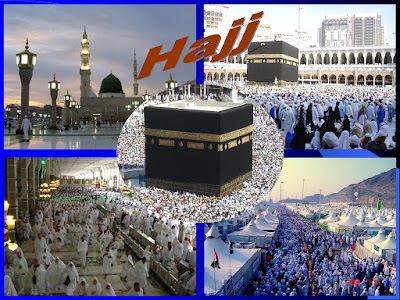
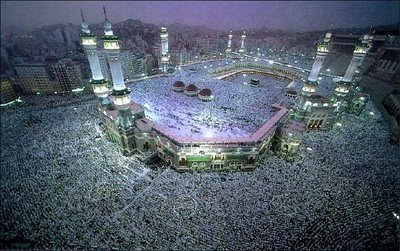
When the Sputnik series of satellites launched by Russia in the space sent some of the first photographs of the Earth, the world got to see the actual view of the globe, the seas, the landscapes, the continents and the ecosystem from the Almighty’s perspective. But one thing that stood out and has amazed everyone till date was an unexplainable brightness emanating from near the Middle East. The place was Mecca, and the brightness was that of the Holy Land of Kaba, the consecrated place for the Muslims, and their point of orientation for worship, or Qibla. The Holy Kaba is the point directly above which the Heavens are located in the skies.

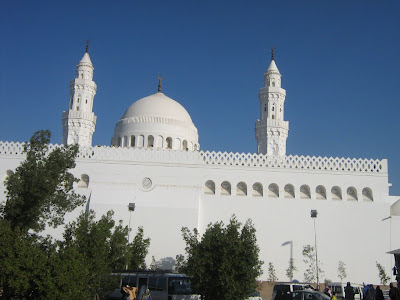
From the time when Prophet Ibrahim (AS) laid the foundation stone of Kaba along with his son Ismail (AS), till eternity or the Day of Judgment, neither has nor will the counter-clockwise circumambulation of the place stop or pause even for a moment. While many believe that the foundation of Kaba was built by Prophet Adam (AS) and it was Prophet Ibrahim (AS) who first constructed the Holy Kaba in its present form. After the advent of Islam by Prophet Muhammad (SAW), Kaba became the centre of pilgrimage for followers of Islam and cities of Mecca and Medina as the holy places. It was agreed upon by the warring tribes during Prophet Muhammad’s (SAW) time at his incest, that Kaba and the place around it be free from all forms of conflict. Kaba unlike perceived by many non-Muslims is not a symbol of worship or an idol, but it is merely a focal point for Muslims all around the world to face while offering Namaz five times a day. So a Muslim praying and submitting himself in prostration to Allah does not have a picture of Kaba, or city of Mecca or Medina or Masjid-e-Nabvi before him, but a person in India will simply face the West direction, person in Africa will face the North direction and a Namazi in America will orient himself towards South West to offer Namaz. To vindicate the non-symbolism of Kaba for worshipping, it is even said that a person not sure of the exact direction of Kaba can assume any direction as Qibla and offer Namaz, and even during the course of his prayers if he realizes that his orientation towards the Qibla is wrong, the person can re-align himself towards the perceived correct direction. One of the interesting things to note here is that, before Kaba, Masjid-e-Aqsa in Jerusalem was the first Qibla for the Muslims to pray towards. It was once during Zuhar (afternoon) Namaz; Prophet Muhammad (SAW) was leading his followers while praying in Masjid-e-Qiblatain in Medina when he got a command from Allah through Jibraee’l (AS), that henceforth Kaba in Mecca will be the Qibla for Muslims. Rather than finishing the prayers, Allah’s apostle Muhammad (SAW) in order to obey the Almighty’s command, immediately turned himself towards Kaba and completed the remaining Namaz towards the new Qibla. Pilgrims visiting Masjid-e-Qiblatain can clearly see that the Masjid has two portions facing different Qibla’s. Its name was hence coined as Qiblatain (Masjid of two Qibla’s).


Hajj is one of the five pillars of Islam and it is ordained that every capable Muslim, physically and financially; must perform Hajj at-least once during his or her lifetime. The money kept aside for performing Hajj should be Halal or earned through legal means as directed in Quran and Hadees. Hajj is performed on the 8th, 9th and 10th day of Zil-Hijj; the last month of Islamic calendar. Embarking upon the journey to Mecca and Medina for Hajj, is itself a great virtue for an individual from the time he makes a commitment to himself to perform the holy pilgrimage. Though it requires great investment from a person in terms of both physical and financial difficulty, the beautiful ordinance from Allah and in the steps of Prophet Muhammad (SAW) is not a rich man’s possession. How then do we reason the not performing of Hajj by some of the most prominent Muslims personalities in India from the field of politics, cinema, sports, arts and business who have all the means but have never been fortunate enough to perform Hajj, while many not so well off people I know from my place and far relatives who have been blessed not once but many times over and have came back more contended and prosperous than ever. Perhaps, as truly said that it is totally Allah’s will, who he desires to visit the holy cities and birthplace of his Prophet (SAW), and for performing Hajj.


From the time when Prophet Ibrahim (AS) laid the foundation of the holy Kaba, the ethnic tribes living in the Arabian Peninsula were following discrete rituals and worshipping idols, which were placed all around the Kaba in Mecca. The sacrificial animals, their meat were strewn around the Kaba and the blood was smeared on its walls as an offering to their gods. Men and women would act indecently going around the Kaba and artists and magicians would make the sanctified place a platform for their performance, making the whole exercise a carnival of immorality; instead of submission and prayers. Prophet Ibrahim (AS) prayed to Almighty Allah, to show the correct path of piety to the followers and guide them. It was then blessed by Allah will that Prophet Ibrahim (AS) summoned the tribes into unity and integrity during the three months beginning from Ramzan till Zil-Hijj when the pilgrimage of Hajj would begin. He laid down rules for everyone; that no wars would take place during this time and people would perform Hajj as per Allah’s guidance. The boundaries or Meeqat for the holy pilgrimage were set in all four directions, beyond which no act of immorality or violence would take place. Prophet Ibrahim (AS) culled all the reprehensible practices and removed the idols from the vicinity of Kaba. The sanctity of Kaba was thus restored and it was until the time when Prophet Muhammad (SAW) shown forth the light of Islam through Qur’an and Hadees that we are still following.


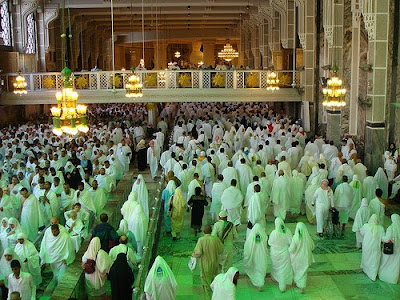
The holy pilgrimage of Hajj begins for a Muslim when he makes a will in his heart to do so. A man on reaching the boundaries of the place of pilgrimage, which is also called as Meeqat, has to shun all his worldly desires, in terms of shaving or combing his hair, applying perfume, indulging in false talks, lies and back biting, seeking sexual pleasures in any form, which can even be looking or glancing at any woman with disrespect and killing of any life forms purposefully. It is said that even trampling a blade of grass or plucking a leaf of plant purposefully will make the Hajj of the person unacceptable while he is on Ihram. These obligations are applicable to women as well as appropriate. While in Ihram a man has to drape himself in a two piece unstitched white cloth leaving his head uncovered and wearing footwear which are open from the top. A woman has to wear free flowing garment providing her enough protection to observe her Hijab. These measures ensure that all people present, in submission of Allah are equal before him and there is no discrimination in terms of gender, race, color or prosperity. And it is upon wearing of Ihram when the pilgrims recite, “Labbaik Allahumma Labbaik” (Here I am O Lord! Here I am), that they submit themselves to come close to Allah.


The rituals of Hajj begin with performing of Tawaf, seven times around the Holy Kaba and praying of two Rakat Namaz behind the Mukam-e-Ibrahim (the place from where Prophet Ibrahim (AS) first placed the foundation of Kaba). People visiting Mecca have observed that the Tawaf around Kaba does not stop even for a second and they have seen birds performing Tawaf above the holy place. Following Tawaf, the Muslims have to perform Sa’ee between the mountains of Safaa & Marwaa. This is a Sunnah (holy act) of Hajra (RA) wife of Prophet Ibrahim (AS), who was left alone in the deserts around these mountains with her infant son Prophet Ismail (AS) with meager provisions of dates and water, upon Allah’s will. As from Qur'an and Hadees, the desperate mother managed with the limited resource for some time but when the dates and water were finished she still fed the toddler with all the milk she had. And when that also finished owing to lack of food and water for her, she tried to make the baby suckle whatever moisture was left on her lips and tongue, when it yearned for water. But the heat of the desert didn’t leave that for long as well and unable to bear the anguish and thirst of the innocent baby, the distraught mother ran across the slopes of Safa and Marwaa in order to see a caravan or Bedouins who might be carrying water, leaving young Prophet Ismail (AS) on the simmering sands. While in between the slopes she was unable to see her baby, Hajra (RA) would run with hurried steps so as to avoid losing sight of the infant. Even to this day the people performing Hajj have been asked to run hurriedly at specific places marked between Safa and Marwaa, to follow what Hajra (RA) had done centuries ago. She ran seven times between the mountains and this act of her pleased Allah so much that he decreed every Haaji (pilgrim) to follow the same and made it a part of performing the Hajj rituals. Distraught, Hajra (RA) came back to her baby only to find that Prophet Ismail (RA), rubbing the heel of his legs on the sand and a tiny fountain of water emanating from the same place. She hastily started building a mound around the source, but the water started flowing with even more vigor, prompting her to say “Zam Zam” in Arabic meaning “Stop Stop”. The sweetest water (people who have tasted vouch for it) was thus named ZamZam and has been flowing out of that source ever since to this day. It is said, had Hajra (RA) not said asked the water to stop, it would have flooded the whole earth. It is indeed a miracle that millions of Haaji’s visit Mecca during Zil-Hijj as well as many others visiting during other times of the year for Umra, drink ZamZam, make ablutions and carry vast amounts in containers for their relatives back home, but never has the water supply decreased nor the source dried, in spite of being right in the middle of the desert. Perhaps it was Allah’s will to create a reason for presenting the people of the desert an eternal source of sweet water, and a foundation for the holiest city of Mecca to be laid, by asking Prophet Ibrahim (AS) to leave Hajra (RA) and Prophet Ismail (AS) in desert. Because it was after this event that people started settling around Safa and Marwah and the holiest city of Mecca came into existence.
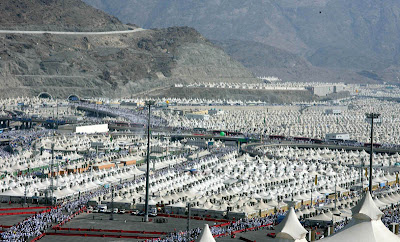
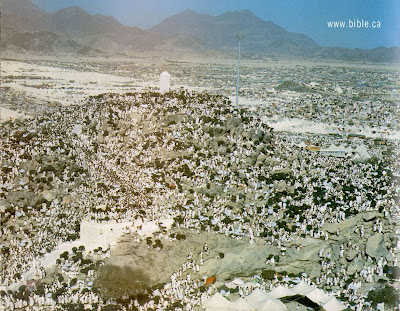
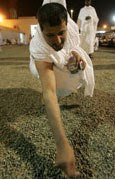
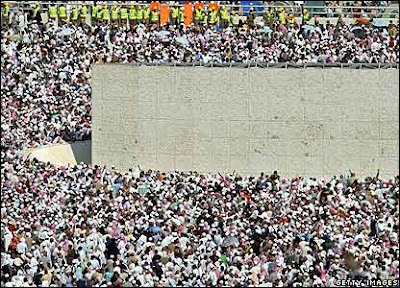
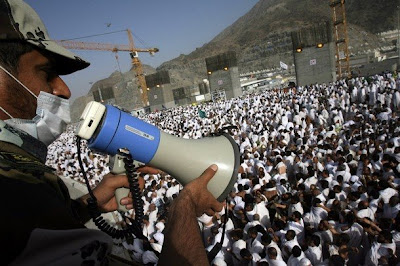
After the Tawaf and Sa’ee the Haaji’s move to the camps of Mina, where they get some time to relax as well as utilize most of the time praying and reciting Qur’an. From the camps of Mina the Haaji’s proceed towards Mount Arafat, where Prophet Muhammad (SAW) delivered his last sermon to the Muslims and provided them all the guidance on how to lead their lives and how to uphold the virtues of the beautiful religion of Islam which was a gift to them from Allah. The plains around the Mount Arafat will be the place wherein all the souls from the time the first life forms appeared on earth till perpetuity, will have to assemble forth Almighty Allah on the Day of Judgment and wherein the evaluation of their sins and virtues will take place. While it is said that the people will run from Prophet Adam (AS) to Prophet Ibrahim (AS) to Prophet Musa (AS) to Prophet Isa (AS) (Jesus) and others in quest of solace from the aura of Allah almighty seeking repentance from their sins and asking for forgiveness, they will hear a soothing voice from one corner, which will be that of Prophet Muhammad (SAW) calling all Muslims; sinners and pious, to come under the shelter of his blessings and wherein he will pray and request Allah to forgive his followers and grant them all, the path to Jannat (Heaven). Allah almighty will surely answers to his dearest Prophets prayers and in time the delinquents will be forgiven after repenting for their misdeeds. Haaji’s start for Mount Arafat from Mina early in the morning after the Fajr (dawn) prayers to reach there by the time of Zuhar (noon). They spend the time at the place until the Maghrib (dusk) prayers, repenting and asking for Allah’s forgiveness for all the sins they have committed and pledging never to repeat them. The scene at Mount Arafat on that day is heart wrenching, when millions of Muslims occupy every nook and corner and being closest to Allah; they cry their heart out seeking exoneration for their wrongdoings. And the Almighty Allah the most Beneficent and Merciful, he does answer the prayers of his lovable worshippers, thus emancipating them of all evils. The Haaji’s return to Mina from Arafat and from there onwards proceed to Muzdalifah on their way to the Jamaraat. Muzdalifah is the place where they are required to collect small pebbles for stoning the Shaitaan (Devil). This particular act is the following of Prophet Ismail (AS) who was being carried away for sacrificing by his father Prophet Ibrahim (AS) on Allah insistence. When Allah asked Prophet Ibrahim (AS) to sacrifice his dearest possession, he knew that it was Prophet Ismail’s (AS) sacrifice that the Almighty desired. Prophet Ibrahim (AS) asked his wife to dress up the child in finest clothes as he was taking him to a marriage ceremony. Neatly groomed and excited at the prospect of the ensuring journey, the young boy accompanied his father, unaware of the truth. On their way, Shaitaan appeared before the child and told that it was not the marriage ceremony that Prophet Ibrahim (AS) was taking him to; instead he was being taken to sacrifice at Allah’s command. To which, young Prophet Ismail (AS), all of seven or eight years replied, “Allah has given me just one life, had He desired that I be sacrificed for his will and resurrected a hundred times over I would have happily done so”, and saying that he picked up some pebbles as his small hands would allow him and threw them at Shaitaan. Twice more the devil tried to distract him and every time Prophet Ismail would throw pebbles at him. Allah Almighty was so greatly impressed by the little child demeanor that ever since the Haaji’s have been asked to follow the Sunnah and stone the devils symbol at those three places called the Jamraat. Haaji’s are instructed to pick only small pebbles at Muzdalifah and not big stones so as to emulate young Prophet Ismail (AS). The events afterwards we are well aware, that Allah replaced the boy with a sheep from the heaven when Prophet Ibrahim (AS) tried to sacrifice him and his obedience and subservience to Allah was verily accepted without Prophet Ismail (AS) being harmed, which has been the basis for Eid-ul-Azha for Muslims all around the world.


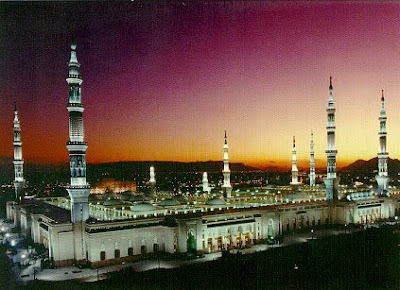
After stoning the Shaitaan, the Haaji’s return to perform Tawaf one last time and then the men are required to shave their heads and offer an animal in sacrifice culminating on the 10th day of Zil-Hijj and thus completing the Hajj of an individual. It is said that once a person completes his Hajj, he is purified of all the sins and is as innocent, as a child born from his mother’s womb. People going for Hajj also make it a point to include the holy city of Medina in their itinerary and pray at the sacred places as Masjid-e-Nabvi, Masjid-e-Qiblatain and Masjid-e-Aisha (the only Masjid in the world for women, named after Prophet Muhammad’s (SAW) wife Aisha (RA)) and Gaar-e-Hira (a cave where Prophet used to pray in seclusion). Visiting the grave of Prophet Muhammad (SAW) and offering Salam is also considered propitious for the pilgrims and so is visiting the graves of other relatives and Sahabi (companions of Prophet) of Prophet Muhammad (SAW).


One is compelled to ask as to why a Muslim undergoes these ordeals to perform the various rituals of accomplishing the Hajj? Isn’t praying and observing the other 4 pillars of Islam namely Kalma (declaration of faith), Namaz (prayers 5 times a day), Zakat (charity to the poor) and Roza (fasting during Ramzan) with dedication not enough to purify oneself? The answer is “Yes” and that is the reason Allah has mentioned that all financially and physically capable person to perform Hajj. Since accretion of wealth without using it, even if it is from Halal (legal) source is considered unlawful in Islam. And what better way than to spend it for your own benefit and deriving nearness to Allah, visiting the land trudged by his beloved Prophet (SAW), the place where your religion has its roots and where the Holy Qur’an was descended upon by Allah through his Angel Jibraeel (AS). The following article beautifully highlights the ethics and significance of each action performed during the Hajj pilgrimage:
http://www.islamonline.net/servlet/Satellite?cid=1124781357691&pagename=IslamOnline-English-Hajj_Umra%2FHajjE%2FHajjE

It was in the past that people embarking for the Hajj pilgrimage were advised to repay all their debts, seek forgiveness from their elders and all those who they have sinned and pay one last tribute to their near and dear ones, since the journey and the rituals were so tumultuous that very few could return, especially those travelling from distant lands. Also it was a belief, especially amongst people from South and South East Asia that Hajj should be undertaken only after a person reaches old age, is free from obligations towards his kin’s and has no other desire left for the materialistic self. Unlike older times when people had to travel on foot or on camels or horses through the Arabian deserts in order to reach Mecca and Medina, braving hardships of inclement environment and bandits on the way, the present journey is hardly anywhere close to being called an ordeal. Haaji’s reach Jeddah or Medina within hours by plane and perform all their rituals inside posh air conditioned construction, enabled with latest technology at the marked places, thanks to the efforts and investments of Saudi government. Be it Haram Sharif surrounding the Kaba, the Safa Marwaa, the camps at Mina or the Jamaraat all places are laced with the best of infrastructure and facility in terms of transportation, food, sanitation, security and safety. Even the untoward incidents of the past, like stampede and fire in camps have been addressed with proper planning and use of latest scientific application. It is indeed astonishing that over 3 million pilgrims, from various countries, languages and culture congregating in one place and sequentially observing the rituals of Hajj without failure and mismanagement, though the efforts of those in charge and off course by the grace and blessings of Allah.

The significance of Hajj lies in obliteration of any traces of bias amongst the Haaji’s visiting the holy land, leaving behind all their worldly desires and affiliation, with complete dedication to his creator for those few days. With every individual wearing Ihram, it removes any discrimination in terms of pecuniary well being and presenting each one as an equal before Allah. The significance of Hajj lies in the feeling of subservience before Allah, when a person first steps inside the Haram Sharif and sights the Holy Kaba, the Qibla for all the followers of Islam that he has been facing all his life from thousands of miles away and one which he had seen only in pictures and videos. The moment is beyond definition as the amazed person is lost at words for praising the aura and divinity of the place overwhelmed by occasion with thousands of people performing Tawaf around the Kaba. This is from the point of view of my parents, grandparents and other relatives who have been blessed to perform Hajj. When Haaji’s completes their Hajj, they are freed from all sins and attain a level of respect amongst relatives and friends. People look at them with admiration and every act of theirs is closely followed by others. The onus then lies on the Haaji’s to maintain the level of chastity attained, by staying away from lies, spitefulness, anger and arrogance in their deportment.