Showing posts with label Enlighten. Show all posts

14 June, 2011

Un-Veiling Dress Code Impositions

(An analysis of French ban on Face Veils)

There was an interesting story which became popular after the Cricket World Cup 1996, when India pulverized Pakistan in the Quarterfinals; The Pakistan team fearing public wrath had arrived back in the middle of the night and were whisked away incognito. Few days later in an up-market shopping mall in Lahore, two women wearing Burka, were haggling for some product with the shopkeeper, when one of them spoke to the other softly, “Wasim Bhai! Please let me buy this product, you can have another one” the other woman was shocked hearing the first lady call ‘her’ Wasim Bhai and replied, “How do you know I am Wasim Akram”, “Because I am Waqar Younis” replied the first woman as ‘he’ lifted ‘his’ veil uncovering ‘her’ face to Wasim Akram, who was disguised as the second lady.


This is just one benefit of wearing a Burka or Abaya or Hijab or Naqab or Veil or a deluge of many such synonyms which are doing rounds of the Dinner table discussion of all those people who don’t wear a Naqab or should be least affected or bothered by their neighbors living in nearby house, or in a distant city of France thousands of kilometers away, who are wearing one. This issue became notorious due to some overzealous French politicians who initiated a bill to ban full face veils in public in France, with countries like Denmark, Belgium and Netherlands too contemplating similar laws for their Muslim citizens (read women).

There are many different kinds of such veils which range from full face veils to long scarves to other different types or fashion statements which vary from Muslim women in USA to European countries to North African sub-Saharan terrains to the Middle East, Indian subcontinent to South East Asian peninsular regions. The reason for the differences in the veils worn by the women in these countries is not religion but the tradition, the culture, the local and societal influence on the way they dress and they present themselves or rather cover themselves. Rather the Purda system was there in India since the ancient times where newlywed girls had to keep their head and faces covered in the in-laws house out of respect to elders and demonstrate a shy and innocent demeanor, which was highly appreciated for a bride. The tradition is still followed in Rajasthan and other northern states and rural areas of India.

The main stress on bringing upon the regionalization aspect of dress codes or it’s so called imposition on people, specifically women is purely cultural and in no way religious. A quick glance on the Veil Fashion reveals (pun intended) that the full face veils or the Naqab's are majorly worn only by women in gulf countries restricted to the conservative Saudi Arabia, Oman, Kuwait, the Taliban suppressed Afghanistan, tribal Pakistan and some parts of India. Most other countries comprising of Iran, Iraq, Jordan, Syria, Turkey, Egypt, Malaysia, Indonesia, Bahrain, Central Asia and others in and around these regions will have women adhering to the basic recommendations of covering their heads while keeping their faces open in public. While Muslims women in some Western European countries and America’s would wear long scarves to cover their head, while wearing the normally worn clothes common in those regions. Now this is not an autopsy of the clothes worn by Muslim women around the world, but just an attempt to showcase the minority percentage of Muslim women who wear full face veils. Considering the majority which does not follow any norms or traditions or these so called imposition myths associated with Islamic dress code or its rather forceful decree; does not stand by way of development or modernization or growth of Muslim women around the world in terms of Education, Career, Governance, etc.

Hijab has never been a gender discriminatory tool of Islam to suppress women. Rather the mention of Hijab in few places in the Holy Quran has been mentioned addressing the men and women in equal measures. Hijab as mentioned by Quran refers to the instructions to both men and women to dress in a modest way, so as not to expose your Awrah in public or in front of strangers. The definition of Awrah too varies differently as per interpretation of various scholars more influenced by their regional considerations than what the message actually put forth by Quran. Awrah refers to parts of body which can be termed as intimate or construed as objects of desires, to safeguard ones modesty and decency in public. These Quranic phrases had an objective at the time in 15th century Arab region when barbarism and violence was rampant. Killing of girl child, child marriages, brutality against women and their denigration as third grade members of the family was commonplace. It was the influence of Islam and the teachings of Prophet Muhammad (SAW) with Quran as a guide and reference which helped in upliftment of women, their education, equal rights within the family and society. (Read my blog ‘Female Education: Vision of Islam’ http://fardinq.blogspot.com/2008/08/female-education-vision-of-islam.html). Decrying the ancient traditions, Prophet Muhammad (SAW) asked the people to maintain decency not only in terms of their way of dressing, but also in behavior, flaunting of wealth, compassion towards poor, respect to elders and decency in way of life. This was applicable for equally for both men and women.

A few Hadith’s (teachings based on Life of Prophet Muhammad (SAW)) do mention how women were advised to maintain a particular dressing sense before strangers (unknown men), which was basically to self guard their respect and honor. People take them as a basis to criticize the Hadith’s while at the same time ignoring what it says about men. As Prophet Muhammad (SAW) mentions, ‘Men should walk upon the streets not with their chest jutting out and showing arrogance or proud, but should walk calmly and always lower their gaze and head in respect upon seeing a woman’. So aren’t these generic advice and education, which we are taught even by our parents since our childhood about maintaining decency, respecting others and dressing appropriately irrespective of our sex or our culture or our religion. I recently read a news snippet about a leading Oscar nominated Hollywood actress, declaring herself as a strict Mom, instructing her two daughters about which type of clothes to wear and whom to befriend. A bit surprising since we generally correlate American and Western society and culture as open and unhindered when compared to our Indian culture and more specific the so called ‘oppressing’ Arab or Islamic tradition. But then it is animal instinct which we see on a Discovery or Animal Planet; a mother lioness pulling her cubs when they entangle themselves in the bushes or fight with each other; she growls and snarls when they don’t listen, because she knows the dangers of the jungle and its threats. Similar is the case with us, human beings; our parents righteously advise us what is good for us and what can cause us harm from nature, society and our surroundings, at an age when we are quite naïve to judge it ourselves about right and wrong around us. So was the case in erstwhile Arab peninsula when Islam and Quran as a guide came upon its people as an advice about the way of living and as a fountain of knowledge of the universe to show them the righteous path.

We move to the subject of state interference in imposing dress code and so called perceived threat of face veils in guise of anti-social elements. The democratically elected Government of France thinks that extremists can wear the face veils and move within the public and cause damage to human life and property without being noticed. A very basic question which crops up here is, ‘Do these extremists tie the explosives on their face and then trigger them?’ No obviously not, they may have it tied around their bellies and around their bodies, etc. So what should be the logical reasoning on screening these anti-socials from the general public?, “Governments should ban wearing clothes altogether”, so that everyone and everything is open and a police officer can easily detect from a distant if a naked man has any explosives tied around his body. A few years back the ‘smart’ Traffic Police authority of the Nagpur (central Indian city) started imposing fine upon people who used to cover their faces with scarves while driving two-wheelers. The intention of the rider was to save his/her face from direct and harmful impact of summer heat-waves reaching almost 49 degrees, causing fatal sun strokes. The Traffic Police said chain snatchers and thieves were executing crimes under this disguise and running away undetected. A lady advocate filed a PIL in the High Court against this draconian edict, which the Honorable Judge overruled. The very next day, two local criminals wearing Helmets with dark visors snatched a bag from a lady waiting at the traffic signal and in the ensuing melee, caused grievous injury to her. The lady advocate filed another PIL justifying banning of Helmets as well, to avoid such crimes. The embarrassed Judge reversed his decision of upholding the Scarf ban and instructed the Traffic Cops to be more vigilant about ensuring Traffic Rules compliance rather than inventing such foolhardy laws.

Now after France; other countries like Belgium, Netherlands and Denmark are contemplating Face Veil bans for its citizens. Remember the last two of these are those whose government rather tried to justify the turmoil which rocked the world when some nut-head editor of their local newspaper published disrespecting caricatures of Prophet Muhammad (SAW) rather than directing them not to interfere and hurt religious sentiments of people (Islam forbids usage of cartoon and imagery of life forms when linked to religion). So we can very well judge that the intention of such a law is not safety or security purpose but some personal vendetta against targeted communities. While it is very well knows that the number of Muslim women wearing full face veils comprises not even 0.005% of the total Muslim population in these countries.

I conducted (tried to) a small survey amongst the female relatives and acquaintance about their views of imposition of face veil ban in European counties. The following are some details of the exercise:

· Targeted Population: 37 (All Adult Females, studying or working in different industry sectors; 4 of these were Muslims)
· Mode of Communication: E-Mail
· Replies received: 16
(2 Muslims)
· Analysis of the Response and Questions Asked:
Now out of 37 only 16 took pains to reply to the questions asked. Of the remaining 21 there are/were many who would seek clarifications from me every time there is some new Fatwa issued in some corner of the world or some incident happened related to Muslims. While I would try to give a just meaningful reply, there would be counter questions upon my view point and also why is such and such rule in place, is it not oppressive, is it not against the law of nature and a plethora of such naïve queries. Now when I asked them about their viewpoints, they chose to backtrack and did not reply, so as not to reveal their thought process and opinion on such issues. Well!! No Hard Feelings, its’ Individual perception

The very purpose of conducting this exercise was to assess what today’s educated women think about other women who are at the receiving end of such laws. The results as shown in the graph above gives a very clear indication, that a majority of women do not support the Face Veil imposition and Government interference in religion and dress codes. They also do not think that Face Veil is a symbol of suppression, verily in congruence to the viewpoint I tried to depict in the earlier part of this blog. To summarize let me quote a couple of beautiful replies received from some of the respondents of this survey (Identity hidden on request).

“During the evolution of religion, in those days, the face veil and other restrictions were acceptable and must have been more common. In today’s age of matured world, (I am not referring to the science and technology, but I am referring to the world of maturity as we are in today), I do believe that these two Quran verses were not interpreted appropriately. I opine these verses personified the need of dressing properly and decently, it’s an epitome of self-restraint and discipline for one self”

“I feel it is not the matter of Oppression or Suppression for all the women but depending upon the environment they have been brought up in, depending upon the value they are given for traditions or customs, depending upon ones individual comfort level, one can take it in positive sense or the other way”

Dress Codes, Religious impositions, Rituals, Decrees, Laws, etc are only justifiable as long as they provide an individual, a sense of belief resulting from its benefits for ones overall safety and development vis-à-vis the society, the culture and upbringing. Interference upon an individuals’ basic freedom of movement and expression in any form is truly condemnable. All the present religions, evolved centuries ago, were not with the intention of intruding one’s existing faith and personal life or its impositions, but as a guide to righteous path for their followers to lead and inculcate the good things and learn to make better their lives mentally and spiritually. An informal survey was conducted by an NGO’s in Mumbai in 2008, upon discovering a slight increase in the percentage of girls wearing full face veils while travelling in Local Trains. The results were startling for them. More than 60% of these girls were non-Muslim’s and were wearing the Naqab’s just as a precautionary safeguard against urchins and eve-teasers in the Local Trains while travelling alone to workplace and colleges. According to them the particular attire as a cover helped them avoid the undue attention from those lecherous hooligans’s, although they would never compromise on the issue of freedom of expression and choice. They would pack their Naqab’s in their bags upon entering the college premises or offices.

And finally regarding my views on Face Veils; I respect all those women who willingly and out of their own conscious decision wear them, but hate those men who try to impose the same upon their wives and sisters and female family members. Summarizing the same in two cases:
Case 1: On my way to Mahabaleshwar (a Hill Station in Western India) in a byway garden restaurant, I truly appreciated the dressing sense of a Muslim family, not out of any religious consideration but how nice they all looked. The bearded father (around 35) wearing a prayer cap covering his head and a pathani suit, was playing with his two kids; one boy (aged around 3) and a girl (aged around 5) as his wife (wearing a full face veiled black Abaya) sat on the bench nearby. The boy was wearing the same dress as his father, while the girl looked an angel wearing a small colorful Abaya just like her mother, only her face was uncovered.

Case 2: At a high end shopping Mall in Hyderabad, I saw a Muslim couple; the man was attired in a jazziest possible way; tight jeans, patterned party shirt, with top three buttons holes open, unkempt hair, unshaven face and a funky belt, flaunting a high end mobile phone. Walking besides him was his wife with her head down, walking slowly and shyly, wearing a black Hijab draped from head to toe with her face covered as well. It was very apparent that while the husband is chilling out, his wife is being subjected to this forceful imposition of wearing an Abaya.

05 February, 2009

Quran

~ Most Comprehensive Encyclopedia of the World & Hereafter


I still remember the incident, when I was returning one evening from my grandfather’s house many years back, and my friend who was a non-Muslim, oriented my gaze towards small kids rushing out of the Masjid after finishing their Deeniyat (Teaching of Quran) classes. “Do you notice something peculiar among these kids with those breaking loose after regular school classes?” I shrugged in ignorance. And contemplated, ‘Perhaps these children here were wearing traditional dresses and their head were covered; both boys and girls. But surely they were as happy and shouting with the same enthusiasm as they would have earlier in the day when their regular schools classes had finished’. “Just see how they hold their Ajza (Each of the 30 Booklets/Parts of Quran), close to their chest and heart and all of them with their right hand”. Indeed I was astonished at his observance and as my childhood days flashed before me I could recall that we too did the same when we used go to and from the Madarsa holding the Yaslan Quran (Quran with selected Surahs and other religious information, especially as a beginner for kids) close to our chest and inadvertently with our right hands, while we rarely did that with any other book. And as with us in our past I was sure none of these children’s parents would have given them instructions, apart from reminding them that it is a Holy Book of Allah and do not drop it on the ground.

Surely it indeed is but just one great significance of Holy Quran, about which Allah himself said that, its protection and originality remains my duty. Significant is the fact that while the other 3 holy books revered by Muslims as divine and blessed upon by Allah on his Prophets, namely Injeel (Bible) on Prophet Isa (Jesus) (AS), Tawraat (Torah) on Prophet Musa (AS), Zaboor on Prophet Dawood (AS), have all undergone changes made by its readers and molded as per the whims of priests and rulers of their times. But Quran in spite of the fact that it wasn’t reveled to its Prophet in written form has not seen alternation of even a single letter or even punctuation from the time it was revealed over a period of 23 years. The Holy Quran mentions about itself not less than 70 times in the Quran and conveys the message of Allah when it mentions, “And we sent down upon you a light, the greatest light”; the light which is a guide to the Muslims and all across the world, till eternity. Though scholars argue if the light mentioned here is in reference to the Holy Quran or Prophet Muhammad (SAW); it belittles the point of argument, as the Holy Quran was revealed upon Prophet Muhammad (SAW) and it was after the first revelations, when he declared his Prophet hood to the world and embarked upon his mission to spread the message of Allah and Islam amongst the people.
Such was the comprehensiveness and power of the message conveyed by Holy Quran, the Kitabullah (book of Allah) that it was not bestowed like the other three books which were revealed to their Prophets in written form and in entirety. Allah sought a medium pure and powerful enough to endure the responsibility of the Holy Quran. And what better place than his beloved Prophet’s heart to encompass the verses of Quran with; vindicated by Allah himself when he says that, “Had we reveled the Quran in written form upon Mount Sinai, it would not have been able to withstand it”.

The Holy Quran has 114 Surahs (chapters) and over 6200 Aayats (verses), each inimitable and comprehensive in itself. In fact Quran itself challenges the mankind in one of its verses, ‘To present a Surah or even an Aayat better than or even equivalent in form and meaning than its own’. A challenge that will remain in vogue, till perpetuity. Quran was first revealed upon Prophet Muhammad (SAW) during the night of Layla-tul Qadr or Shab-e-Qadr, during Ramzan. It was over a period of 23 years that Angel Jibraeel (AS) would descend from heavens and recite verses of Quran to Prophet Muhammad (SAW), who would take efforts to recite the verses along with him. But Allah was unwilling to see his dear Prophet take even that much efforts and he said, “O Muhammad (SAW), you need not trouble your tongue to recite the Quran, We have made it such that it will be encrypted in your heart.” Prophet Muhammad (SAW) on his part would recite and remember it and convey it to his Sahaba (followers) and commoners along with its interpretation and elucidating its message, for them to learn and take guidance from. The Sahaba would remember the Quranic verses and write it on tablets and papers to conserve it. Though it was not until long after Prophet Muhammad when under Caliph Usmaan (RA), the first fully complied Holy Quran was brought out in the form of a book. Thus vindicating the fact Allah said, ‘That it’s upon himself to preserve and protect the Holy Quran’. It didn’t seek dependence or presence in physical form of a book, but was passed upon from Allah to Prophet Muhammad (SAW) through Jibraeel (AS), and from him to Sahaba and others just through recitation. Even today thousands of Muslims dedicate themselves to learn Quran and preserve it in their hearts.

The benefits and rewards of reciting and learning Quran are immense and incomparable. Each of the Surat and Aayat of Quran has its own significance and reciting it provides the reader insurmountable benefits. Aisha (RA) wife of Prophet Muhammad (SAW) said, “Prophet has himself mentioned that reciting Quran on a regular basis provides many rewards to the reader, and for those who recite it with great difficulty, not well versed with Arabic and take efforts to pronounce each word correctly; for them the rewards are double”. Thus it is not those fluent in Arabic are only to be benefitted; instead it should be responsibility of people to learn Arabic to understand the Quran or at least learn to read; a case in point to vindicate the fact, that Islam propagates literacy as compulsory amongst its followers. Every effort should be made to understand Quran by reading its translation in language of their comfort if not in Arabic. Although such are the benefits of reading Quran that reading just a single letter, not even a complete word will increase your good deeds by 10 every time. Thus it is advisable to read at least 10 Aayats of Quran before Fajr Namaz every morning and the person will never suffer from forgetfulness ever in his life. Surah Fatiha (1st Surah) is a summary of Quran in itself and learning and reciting it in Namaz is mandatory. Quran provides us the beautiful phrase of “Bismillah Ar-Rahman Ir-Rahim” as a commencing sentence for every task we undertake.

A person who learns and understands Quran by heart is honored by the title of Hafiz. Not only a Hafiz but also his parents are rewarded with a place in Jannat (Heaven). Prophet Muhammad (SAW) said, “On the day of Judgment, there will be a group of people who will enter Jannat even before the Shohda (martyrs) and their parents will have a crown of bright light over their heads” “Who will all they be Rasuaallah (SAW)?” asked the Sahaba, “They will be the Hafiz who learn and understand Quran”. History is abound with examples of how people took efforts to learn and understand Quran and derive benefits from it. When the two young sons of Aurangzeb Alamgir, the last of the influential Mughal Emperor told him about their becoming Hafiz having learnt the whole Quran, Aurangzeb asked them to communicate the good news to their grandfather Shahjahan. The youngsters joyfully apprised Shahjahan of their accomplishment, who blessed them but still said grieving, “What benefit is this for me, I would have been more delighted had one of my sons become Hafiz”. The duo dutifully conveyed their grandfather’s wishes to Aurangzeb; who was 58 years old at that time. The Emperor took it upon itself religiously and in two years he learnt the whole Quran to become a Hafiz himself to fulfill his ailing father’s desire. Historic facts in our books about Aurangzeb notwithstanding, this was but one of the brighter aspects of the last and most powerful Emperor of the Indian subcontinent.

The influence of Quran has inspired many and apart from the aura and personality of Prophet Muhammad (SAW) it was also the verses of Quran whose help he sought to invite people to accept the religion of Islam and to convey Allah’s command upon them. Who can forget the events of how Umar (RA) converted to Islam. Umar (RA) a well built, outspoken and intelligent person was a staunch supporter of Quraysh tribes, who were fiercely opposed to Prophets Muhammad (SAW) and his message of Islam and oneness of Allah. Perturbed by their inability to stop The Prophet and his mission, Umar (RA) vowed to kill him and started from his abode with a sword in his hand and blood in his eyes, wherein he met a person who inquired him. On knowing his intentions, the man ridiculed Umar (RA) asking him to first set things right in his own house before seeking revenge from Prophet Muhammad (SAW). An astonished Umar (RA) sought clarification and came to know that his daughter (or sister as claimed by some historians) and her husband have accepted Islam as their faith. Raging in fury Umar (RA) ran to kill his daughter and son in law first and then seek The Prophet. Upon reaching the entrance of their house, he saw them reciting verses of Holy Quran, enraging him even more. As he neared them the verses of Quran fell upon his ears and he started trembling in trepidation; the sword fell from his hands and he dropped down to his knees repenting his action and ignorance for Prophet Muhammad (SAW) and Islam. He immediately presented himself forth Prophet Muhammad (SAW) and converted to Islam and avowed himself to his mission and became one of his most faithful Sahaba. The ramifications of Quranic messages influenced many more during and after the time of Prophet Muhammad (SAW).

One such story is that of an Imam in earlier times whose parrot had learnt 7 Ajza (Parts/booklets of Quran totaling 30), as he would hear the Imam reciting the Quran daily. It is totally upon Allah who he wills to learn and seek guidance from Quran. Abdul Qadir Geelani (RA) better known as Gaus Pak was one of the greatest Imams of Muslims and of Prophet Muhammad’s (SAW) lineage, who spread the message of Islam in the lands of Geelan (present day Afghanistan) and Iraq. It is said that when his mother was pregnant and he was still in her womb, she used to religiously recite verses from Holy Quran every morning. Soon after Abdul Qadir (RA) was born and when he was 3 years old, his mother took him to a Madarsa for admission. The elderly teacher at the seminary opened the Holy Quran before the infant and pointing his finger on the first phrase recited “Bismillah Ar-Rahman Ir-Rahim”; then looking at the little boy he said, “Repeat”. Abdul Qadir (RA) recited ‘Bismillah’ in the most beautiful and innocent voice and then moved on to Surah Faitha and continued his recitation of the Quran till the time he finished the 15th Ajza. His teacher was flabbergasted and perplexed at the loss of words to praise the young boy. On enquiring, Abdul Qadir (RA) replied that while he was in his mother’s womb he would hear her daily recite the Holy Quran, but by the time she finished the 15th Ajza, she was due and gave birth to him hence he could not listen to the remaining 15 Juz as regularly.

The Quran is the most comprehensive and exhaustive encyclopedia. It narrates incidents about past Prophets and their followers and asks us to seek guidance and learn from them. Quran also mentions greatness of Allah and how he created everything and everyone. It also praises Prophet Muhammad (SAW) and provides an insight about the life hereafter, the horrors of Jahannam (Hell) as well as the goodness and rewards of the Jannat (Heaven). It paves a path for us on how to lead our lives in this world and constantly prepare ourselves for our death and for the Day of Judgment. It even provides reasoning and base for the natural occurrences of the Universe & the World and is a remedy for all the problems. Though some people doubt the latter claims, it is upon an individual to repose faith in Quran and gain knowledge from the beautifully explained phenomenon in form of Aayats and Surahs related to diverse subjects and incidents occurred over time during the lives of various Prophets sent down by Allah for the good of the mankind.

Ahmad Hasan Zewail, the Nobel Laureate in Chemistry from Egypt is also the pioneer of discovering a non-invasive remedy for cataract and other eye ailments. In one of the interview’s he attributed his concoction to Holy Quran. Surah Yusuf, he said, mentions about the life and ordeals of Prophet Yusuf (AS), who was apple of an eye to his father, Prophet Yaqub (AS). The elder brothers of Prophet Yusuf (AS) jealous of their younger sibling, plotted to kill him, but instead sold him to Egyptian traders. Then they conveyed false news of his death to their old father, who was partially blind. On hearing about the death of his beloved son, Prophet Yaqub (AS) wept inconsolably for a long time (many years as per some scholars). Upon overcoming his grief, he found that his eyesight had improved considerably. This piece of information in the Holy Quran caught Ahmad Zewail’s attention, compelling him to think why Quran should dedicate a verse mentioning crying of Prophet Yaqub (AS), tears filling up his eyes and consequently his eyesight recovering. He focused his research on the subject and found that human tears had a chemical composition to provide relief from eye diseases and cataract in particular. This is just one example of how we could gain understanding and solution for our problems citing interpretations from Quran in a proper manner.
Reading Quran and paying due reverence to it, is obligatory for every Muslim. It is desired that one should read Quran daily, even if it is just a few verses. Quran is not an object of decoration adoring a place high on the shelf, only to be brought down on special occasions, shower kisses upon and pledging oath against. Instead it should be read and understood as regularly as possible. As per Prophet Muhammad (SAW), when a person dies and people carry his Janazah (mortal remains) for burial, a very handsome man in brilliant white clothes will accompany him all along the way, whom no one will be able to see. When the dead body will be laid inside the grave, this man will descend into it to be buried along with the Janazah. He will cover himself upon the dead person and provide him all the comfort inside the grave. This man will even assist him when the Angels will come for questioning the dead person’s faith. The Angel’s would then ask this man, “Who are you and why are you helping this person?” and he would reply, “I am Quran. This person used to read me daily and tried to gain understanding from me. He would seek guidance from me for all his chores. It is my duty to assist him and I will not rest, till the time I help him enter the Jannat”. Verily Quran will be our interceder on the Day of Judgment, when every person will try to resuscitate himself on his own good deeds, to outweigh his transgressions.

Mahmood Ghazni, the Sultan from Afghanistan, attacked kingdoms of Indian subcontinent in 11th century. Once on a hunting expedition, he got estranged from his troops and lost his way in the jungles. As darkness loomed, he found a small hut which belonged to an old women. He requested her to provide him shelter overnight, to which she obliged. Ghazni was led to a very small and narrow passage inside wherein a straw mat was laid down; the old woman meanwhile slept in the only other room. The tall and well built Sultan, prepared to lay down, when he saw Holy Quran on the shelf at one end of the passage wall. So he oriented himself with his feet pointing in opposite side, but that was the direction of Qibla. His hands weren’t clean enough to touch the Quran and his host had already dozed off; he thought it inappropriate to disturb her. Unable to stretch himself along the breadth of the passage, Ghazni spent the night in a seated position with his legs folded, assuring his full reverence to the Quran and Qibla. Years later when he was on his death bed, a voice in his dream, recalled this incident and told him that Allah was so pleased with his act of paying respect to Holy Quran, that he had the Angels write an infinite number of good deeds against his name. Who knows maybe just one act of our esteem for Quran might please Allah, and become a cause for our salvation hereafter.

18 December, 2008

Significance of Hajj

~ The virtues of visiting the Holy cities of Mecca and Medina


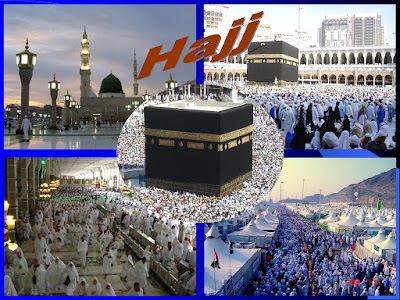
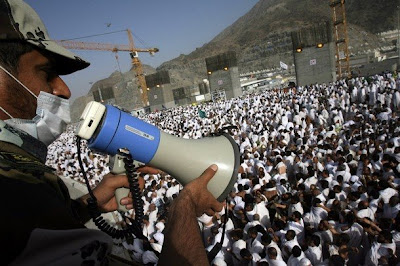
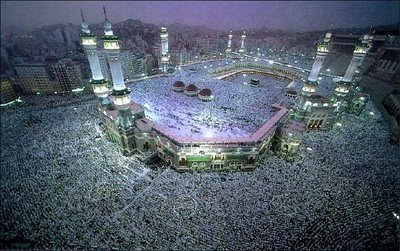
When the Sputnik series of satellites launched by Russia in the space sent some of the first photographs of the Earth, the world got to see the actual view of the globe, the seas, the landscapes, the continents and the ecosystem from the Almighty’s perspective. But one thing that stood out and has amazed everyone till date was an unexplainable brightness emanating from near the Middle East. The place was Mecca, and the brightness was that of the Holy Land of Kaba, the consecrated place for the Muslims, and their point of orientation for worship, or Qibla. The Holy Kaba is the point directly above which the Heavens are located in the skies.

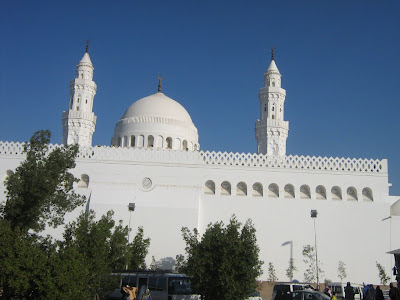
From the time when Prophet Ibrahim (AS) laid the foundation stone of Kaba along with his son Ismail (AS), till eternity or the Day of Judgment, neither has nor will the counter-clockwise circumambulation of the place stop or pause even for a moment. While many believe that the foundation of Kaba was built by Prophet Adam (AS) and it was Prophet Ibrahim (AS) who first constructed the Holy Kaba in its present form. After the advent of Islam by Prophet Muhammad (SAW), Kaba became the centre of pilgrimage for followers of Islam and cities of Mecca and Medina as the holy places. It was agreed upon by the warring tribes during Prophet Muhammad’s (SAW) time at his incest, that Kaba and the place around it be free from all forms of conflict. Kaba unlike perceived by many non-Muslims is not a symbol of worship or an idol, but it is merely a focal point for Muslims all around the world to face while offering Namaz five times a day. So a Muslim praying and submitting himself in prostration to Allah does not have a picture of Kaba, or city of Mecca or Medina or Masjid-e-Nabvi before him, but a person in India will simply face the West direction, person in Africa will face the North direction and a Namazi in America will orient himself towards South West to offer Namaz. To vindicate the non-symbolism of Kaba for worshipping, it is even said that a person not sure of the exact direction of Kaba can assume any direction as Qibla and offer Namaz, and even during the course of his prayers if he realizes that his orientation towards the Qibla is wrong, the person can re-align himself towards the perceived correct direction. One of the interesting things to note here is that, before Kaba, Masjid-e-Aqsa in Jerusalem was the first Qibla for the Muslims to pray towards. It was once during Zuhar (afternoon) Namaz; Prophet Muhammad (SAW) was leading his followers while praying in Masjid-e-Qiblatain in Medina when he got a command from Allah through Jibraee’l (AS), that henceforth Kaba in Mecca will be the Qibla for Muslims. Rather than finishing the prayers, Allah’s apostle Muhammad (SAW) in order to obey the Almighty’s command, immediately turned himself towards Kaba and completed the remaining Namaz towards the new Qibla. Pilgrims visiting Masjid-e-Qiblatain can clearly see that the Masjid has two portions facing different Qibla’s. Its name was hence coined as Qiblatain (Masjid of two Qibla’s).


Hajj is one of the five pillars of Islam and it is ordained that every capable Muslim, physically and financially; must perform Hajj at-least once during his or her lifetime. The money kept aside for performing Hajj should be Halal or earned through legal means as directed in Quran and Hadees. Hajj is performed on the 8th, 9th and 10th day of Zil-Hijj; the last month of Islamic calendar. Embarking upon the journey to Mecca and Medina for Hajj, is itself a great virtue for an individual from the time he makes a commitment to himself to perform the holy pilgrimage. Though it requires great investment from a person in terms of both physical and financial difficulty, the beautiful ordinance from Allah and in the steps of Prophet Muhammad (SAW) is not a rich man’s possession. How then do we reason the not performing of Hajj by some of the most prominent Muslims personalities in India from the field of politics, cinema, sports, arts and business who have all the means but have never been fortunate enough to perform Hajj, while many not so well off people I know from my place and far relatives who have been blessed not once but many times over and have came back more contended and prosperous than ever. Perhaps, as truly said that it is totally Allah’s will, who he desires to visit the holy cities and birthplace of his Prophet (SAW), and for performing Hajj.


From the time when Prophet Ibrahim (AS) laid the foundation of the holy Kaba, the ethnic tribes living in the Arabian Peninsula were following discrete rituals and worshipping idols, which were placed all around the Kaba in Mecca. The sacrificial animals, their meat were strewn around the Kaba and the blood was smeared on its walls as an offering to their gods. Men and women would act indecently going around the Kaba and artists and magicians would make the sanctified place a platform for their performance, making the whole exercise a carnival of immorality; instead of submission and prayers. Prophet Ibrahim (AS) prayed to Almighty Allah, to show the correct path of piety to the followers and guide them. It was then blessed by Allah will that Prophet Ibrahim (AS) summoned the tribes into unity and integrity during the three months beginning from Ramzan till Zil-Hijj when the pilgrimage of Hajj would begin. He laid down rules for everyone; that no wars would take place during this time and people would perform Hajj as per Allah’s guidance. The boundaries or Meeqat for the holy pilgrimage were set in all four directions, beyond which no act of immorality or violence would take place. Prophet Ibrahim (AS) culled all the reprehensible practices and removed the idols from the vicinity of Kaba. The sanctity of Kaba was thus restored and it was until the time when Prophet Muhammad (SAW) shown forth the light of Islam through Qur’an and Hadees that we are still following.


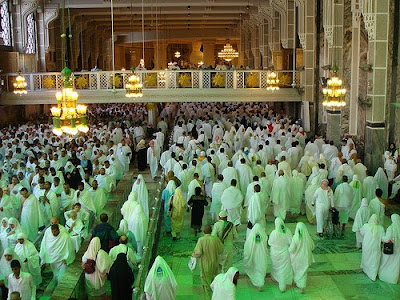
The holy pilgrimage of Hajj begins for a Muslim when he makes a will in his heart to do so. A man on reaching the boundaries of the place of pilgrimage, which is also called as Meeqat, has to shun all his worldly desires, in terms of shaving or combing his hair, applying perfume, indulging in false talks, lies and back biting, seeking sexual pleasures in any form, which can even be looking or glancing at any woman with disrespect and killing of any life forms purposefully. It is said that even trampling a blade of grass or plucking a leaf of plant purposefully will make the Hajj of the person unacceptable while he is on Ihram. These obligations are applicable to women as well as appropriate. While in Ihram a man has to drape himself in a two piece unstitched white cloth leaving his head uncovered and wearing footwear which are open from the top. A woman has to wear free flowing garment providing her enough protection to observe her Hijab. These measures ensure that all people present, in submission of Allah are equal before him and there is no discrimination in terms of gender, race, color or prosperity. And it is upon wearing of Ihram when the pilgrims recite, “Labbaik Allahumma Labbaik” (Here I am O Lord! Here I am), that they submit themselves to come close to Allah.


The rituals of Hajj begin with performing of Tawaf, seven times around the Holy Kaba and praying of two Rakat Namaz behind the Mukam-e-Ibrahim (the place from where Prophet Ibrahim (AS) first placed the foundation of Kaba). People visiting Mecca have observed that the Tawaf around Kaba does not stop even for a second and they have seen birds performing Tawaf above the holy place. Following Tawaf, the Muslims have to perform Sa’ee between the mountains of Safaa & Marwaa. This is a Sunnah (holy act) of Hajra (RA) wife of Prophet Ibrahim (AS), who was left alone in the deserts around these mountains with her infant son Prophet Ismail (AS) with meager provisions of dates and water, upon Allah’s will. As from Qur'an and Hadees, the desperate mother managed with the limited resource for some time but when the dates and water were finished she still fed the toddler with all the milk she had. And when that also finished owing to lack of food and water for her, she tried to make the baby suckle whatever moisture was left on her lips and tongue, when it yearned for water. But the heat of the desert didn’t leave that for long as well and unable to bear the anguish and thirst of the innocent baby, the distraught mother ran across the slopes of Safa and Marwaa in order to see a caravan or Bedouins who might be carrying water, leaving young Prophet Ismail (AS) on the simmering sands. While in between the slopes she was unable to see her baby, Hajra (RA) would run with hurried steps so as to avoid losing sight of the infant. Even to this day the people performing Hajj have been asked to run hurriedly at specific places marked between Safa and Marwaa, to follow what Hajra (RA) had done centuries ago. She ran seven times between the mountains and this act of her pleased Allah so much that he decreed every Haaji (pilgrim) to follow the same and made it a part of performing the Hajj rituals. Distraught, Hajra (RA) came back to her baby only to find that Prophet Ismail (RA), rubbing the heel of his legs on the sand and a tiny fountain of water emanating from the same place. She hastily started building a mound around the source, but the water started flowing with even more vigor, prompting her to say “Zam Zam” in Arabic meaning “Stop Stop”. The sweetest water (people who have tasted vouch for it) was thus named ZamZam and has been flowing out of that source ever since to this day. It is said, had Hajra (RA) not said asked the water to stop, it would have flooded the whole earth. It is indeed a miracle that millions of Haaji’s visit Mecca during Zil-Hijj as well as many others visiting during other times of the year for Umra, drink ZamZam, make ablutions and carry vast amounts in containers for their relatives back home, but never has the water supply decreased nor the source dried, in spite of being right in the middle of the desert. Perhaps it was Allah’s will to create a reason for presenting the people of the desert an eternal source of sweet water, and a foundation for the holiest city of Mecca to be laid, by asking Prophet Ibrahim (AS) to leave Hajra (RA) and Prophet Ismail (AS) in desert. Because it was after this event that people started settling around Safa and Marwah and the holiest city of Mecca came into existence.
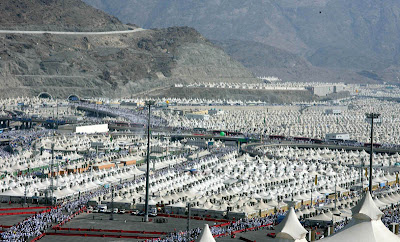
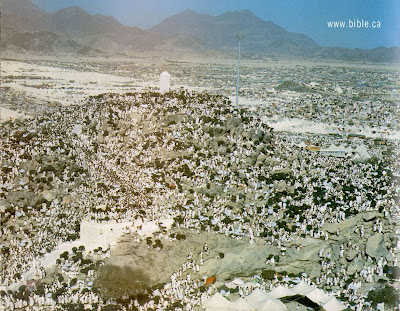
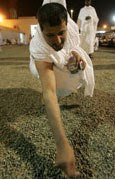
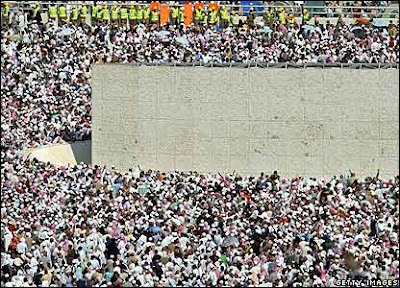
After the Tawaf and Sa’ee the Haaji’s move to the camps of Mina, where they get some time to relax as well as utilize most of the time praying and reciting Qur’an. From the camps of Mina the Haaji’s proceed towards Mount Arafat, where Prophet Muhammad (SAW) delivered his last sermon to the Muslims and provided them all the guidance on how to lead their lives and how to uphold the virtues of the beautiful religion of Islam which was a gift to them from Allah. The plains around the Mount Arafat will be the place wherein all the souls from the time the first life forms appeared on earth till perpetuity, will have to assemble forth Almighty Allah on the Day of Judgment and wherein the evaluation of their sins and virtues will take place. While it is said that the people will run from Prophet Adam (AS) to Prophet Ibrahim (AS) to Prophet Musa (AS) to Prophet Isa (AS) (Jesus) and others in quest of solace from the aura of Allah almighty seeking repentance from their sins and asking for forgiveness, they will hear a soothing voice from one corner, which will be that of Prophet Muhammad (SAW) calling all Muslims; sinners and pious, to come under the shelter of his blessings and wherein he will pray and request Allah to forgive his followers and grant them all, the path to Jannat (Heaven). Allah almighty will surely answers to his dearest Prophets prayers and in time the delinquents will be forgiven after repenting for their misdeeds. Haaji’s start for Mount Arafat from Mina early in the morning after the Fajr (dawn) prayers to reach there by the time of Zuhar (noon). They spend the time at the place until the Maghrib (dusk) prayers, repenting and asking for Allah’s forgiveness for all the sins they have committed and pledging never to repeat them. The scene at Mount Arafat on that day is heart wrenching, when millions of Muslims occupy every nook and corner and being closest to Allah; they cry their heart out seeking exoneration for their wrongdoings. And the Almighty Allah the most Beneficent and Merciful, he does answer the prayers of his lovable worshippers, thus emancipating them of all evils. The Haaji’s return to Mina from Arafat and from there onwards proceed to Muzdalifah on their way to the Jamaraat. Muzdalifah is the place where they are required to collect small pebbles for stoning the Shaitaan (Devil). This particular act is the following of Prophet Ismail (AS) who was being carried away for sacrificing by his father Prophet Ibrahim (AS) on Allah insistence. When Allah asked Prophet Ibrahim (AS) to sacrifice his dearest possession, he knew that it was Prophet Ismail’s (AS) sacrifice that the Almighty desired. Prophet Ibrahim (AS) asked his wife to dress up the child in finest clothes as he was taking him to a marriage ceremony. Neatly groomed and excited at the prospect of the ensuring journey, the young boy accompanied his father, unaware of the truth. On their way, Shaitaan appeared before the child and told that it was not the marriage ceremony that Prophet Ibrahim (AS) was taking him to; instead he was being taken to sacrifice at Allah’s command. To which, young Prophet Ismail (AS), all of seven or eight years replied, “Allah has given me just one life, had He desired that I be sacrificed for his will and resurrected a hundred times over I would have happily done so”, and saying that he picked up some pebbles as his small hands would allow him and threw them at Shaitaan. Twice more the devil tried to distract him and every time Prophet Ismail would throw pebbles at him. Allah Almighty was so greatly impressed by the little child demeanor that ever since the Haaji’s have been asked to follow the Sunnah and stone the devils symbol at those three places called the Jamraat. Haaji’s are instructed to pick only small pebbles at Muzdalifah and not big stones so as to emulate young Prophet Ismail (AS). The events afterwards we are well aware, that Allah replaced the boy with a sheep from the heaven when Prophet Ibrahim (AS) tried to sacrifice him and his obedience and subservience to Allah was verily accepted without Prophet Ismail (AS) being harmed, which has been the basis for Eid-ul-Azha for Muslims all around the world.


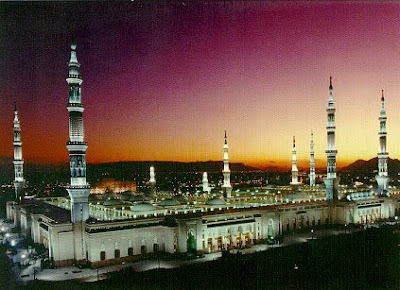
After stoning the Shaitaan, the Haaji’s return to perform Tawaf one last time and then the men are required to shave their heads and offer an animal in sacrifice culminating on the 10th day of Zil-Hijj and thus completing the Hajj of an individual. It is said that once a person completes his Hajj, he is purified of all the sins and is as innocent, as a child born from his mother’s womb. People going for Hajj also make it a point to include the holy city of Medina in their itinerary and pray at the sacred places as Masjid-e-Nabvi, Masjid-e-Qiblatain and Masjid-e-Aisha (the only Masjid in the world for women, named after Prophet Muhammad’s (SAW) wife Aisha (RA)) and Gaar-e-Hira (a cave where Prophet used to pray in seclusion). Visiting the grave of Prophet Muhammad (SAW) and offering Salam is also considered propitious for the pilgrims and so is visiting the graves of other relatives and Sahabi (companions of Prophet) of Prophet Muhammad (SAW).


One is compelled to ask as to why a Muslim undergoes these ordeals to perform the various rituals of accomplishing the Hajj? Isn’t praying and observing the other 4 pillars of Islam namely Kalma (declaration of faith), Namaz (prayers 5 times a day), Zakat (charity to the poor) and Roza (fasting during Ramzan) with dedication not enough to purify oneself? The answer is “Yes” and that is the reason Allah has mentioned that all financially and physically capable person to perform Hajj. Since accretion of wealth without using it, even if it is from Halal (legal) source is considered unlawful in Islam. And what better way than to spend it for your own benefit and deriving nearness to Allah, visiting the land trudged by his beloved Prophet (SAW), the place where your religion has its roots and where the Holy Qur’an was descended upon by Allah through his Angel Jibraeel (AS). The following article beautifully highlights the ethics and significance of each action performed during the Hajj pilgrimage:
http://www.islamonline.net/servlet/Satellite?cid=1124781357691&pagename=IslamOnline-English-Hajj_Umra%2FHajjE%2FHajjE

It was in the past that people embarking for the Hajj pilgrimage were advised to repay all their debts, seek forgiveness from their elders and all those who they have sinned and pay one last tribute to their near and dear ones, since the journey and the rituals were so tumultuous that very few could return, especially those travelling from distant lands. Also it was a belief, especially amongst people from South and South East Asia that Hajj should be undertaken only after a person reaches old age, is free from obligations towards his kin’s and has no other desire left for the materialistic self. Unlike older times when people had to travel on foot or on camels or horses through the Arabian deserts in order to reach Mecca and Medina, braving hardships of inclement environment and bandits on the way, the present journey is hardly anywhere close to being called an ordeal. Haaji’s reach Jeddah or Medina within hours by plane and perform all their rituals inside posh air conditioned construction, enabled with latest technology at the marked places, thanks to the efforts and investments of Saudi government. Be it Haram Sharif surrounding the Kaba, the Safa Marwaa, the camps at Mina or the Jamaraat all places are laced with the best of infrastructure and facility in terms of transportation, food, sanitation, security and safety. Even the untoward incidents of the past, like stampede and fire in camps have been addressed with proper planning and use of latest scientific application. It is indeed astonishing that over 3 million pilgrims, from various countries, languages and culture congregating in one place and sequentially observing the rituals of Hajj without failure and mismanagement, though the efforts of those in charge and off course by the grace and blessings of Allah.

The significance of Hajj lies in obliteration of any traces of bias amongst the Haaji’s visiting the holy land, leaving behind all their worldly desires and affiliation, with complete dedication to his creator for those few days. With every individual wearing Ihram, it removes any discrimination in terms of pecuniary well being and presenting each one as an equal before Allah. The significance of Hajj lies in the feeling of subservience before Allah, when a person first steps inside the Haram Sharif and sights the Holy Kaba, the Qibla for all the followers of Islam that he has been facing all his life from thousands of miles away and one which he had seen only in pictures and videos. The moment is beyond definition as the amazed person is lost at words for praising the aura and divinity of the place overwhelmed by occasion with thousands of people performing Tawaf around the Kaba. This is from the point of view of my parents, grandparents and other relatives who have been blessed to perform Hajj. When Haaji’s completes their Hajj, they are freed from all sins and attain a level of respect amongst relatives and friends. People look at them with admiration and every act of theirs is closely followed by others. The onus then lies on the Haaji’s to maintain the level of chastity attained, by staying away from lies, spitefulness, anger and arrogance in their deportment.

31 July, 2008

Shab-e-Meraj ~ The Night of Ascension

27th Rajjab


In the Surah al-Isra (Qur'an 17:1), it is mentioned: “Glory be to Him! Who made His messenger (Prophet Muhammad) to go on a night from the Sacred Mosque (Holy Kaaba) to the Farthest Mosque (Masjid-e-Aqsa) of which We have blessed the precincts, so that We may show to him some of Our signs; surely He is the Hearing, the Seeing.

The event in the Islamic calendar being glorified by Allah himself in the Holy Quran is the Night of Ascension or the Shab-e-Meraj. It is marked as one of the golden annals in the growth of the religion of Islam as well as establishing the prominence of Prophet Muhammad (SAW) as the Prophet of the prophets. The night of 27th Rajjab of the Islamic calendar, when in an instance of that night Prophet Muhammad (SAW) was ascended to the heavens across the veils of skies and other holy places by angel Jibraeel at the insistence of Allah. It is said that the whole episode was over in the time it takes for a swinging chain (or pendulum) to return to its mean position from its extreme angle. While many others believe that the entire universe stood still from the time when Prophet Muhammad (SAW) was wakened up by Jibraeel till he was brought back after traversing the entire creations of Almighty Allah across the skies. The apprehensions of many people doubting this event was clarified by the greatest Islamic scholar Imam Ahmad Raza said in the following verse, “Wo na the to kuch naa tha, Wo na ho to kuch na ho; Jaan hai wo jahan ki, Jaan hai to Jahan hai”. Speaking of Prophet Muhammad (SAW) he said, “When he wasn’t there, there was Nothing, If he isn’t there, there will be Nothing. He is the soul of the entire creations of Allah, and as long as the soul (Prophet Muhammad SAW) is there, the universe will be there.”

Expounding more upon this can be vouched at the instance when Prophet Muhammad (SAW) was ascending during Meraj along with Jibraeel. He asked the Leader of the Malaekeen (Angels), “Jibraeel! What is your age?”, to which the holy angel replied, “O Prophet (SAW), I have never kept track of my age, but since the time I was brought into existence by Allah, I have seen a very bright source of light, at the horizons of the Heaven, which comes into existence once in 70,000 years. And I have seen that light 70,000 times in my life. So that will be my age.” The Prophet (SAW) smiled back at him and asked, “Jibraeel, do you know what is that source of light?” The innocent angel replied in negative. “I am that light, it is my soul” said Prophet Muhammad (SAW), “That light is the very first creation of Allah. Had it not been created, nothing would have come into existence. The entire universe, the earth, the life-forms, the angels and all the prophets; they all owe their existence to that source of light, which is my soul.”

Those who doubt the authenticity of the event of Meraj and that it happened in reality when Prophet Muhammad (SAW) made the eventful journey to meet Allah in person and not in his dreams and that the whole episode was over in an instance, can be said that, it is a similar concept of a body and the soul. The body functions as long as the soul is there. Take the case of a watch, and let’s treat it as a body and the cell which runs the watch will be its soul. When you take out the cell from the watch, it stops functioning and its needles come to a standstill there and then. Now if you replace the cell back to its position, after 5 minutes or 5 hours or 5,000 years, the watch (unless tampered or destroyed) will resume its functioning from the instance when its cell was removed. The same was the case on the night of Meraj. The soul of the universe and all life-forms that is Prophet Muhammad (SAW) was called upon by Allah; and as he was raised to the heavens, the whole world came to a standstill. And all the while when Prophet Muhammad (SAW) was paying visit to Allah and his creations, the world lay life-less, only to be revived upon his return. So who are we as mere mortal, to doubt the genuineness of Shab-e-Meraj? People have reservations believing the ascension of Prophet Muhammad (SAW) above the skies and his presence forth Allah, in person, but Imam Ahmad Raza said in one of his countless books, “Mankind has wondered, how can Prophet Muhammad (SAW), be raised in person to the heavens in an instance, I have been wondering how the beloved soul and Prophet of Allah spend 63 years of his life on the earth amongst the sinners? His rank is too high and so close is he to Allah that it’s a sin to call him as one amongst ourselves.”

The night of Meraj was a gift of Allah to his Prophet and his followers, for what he returned with was immense knowledge of Allah’s creations and a way of worshipping our Almighty in the form of Namaz. The Prophet was carried upon Burraq, the legendary creature, which took him to places like Tayibbah (Madina), Mount Sinai – the place where Prophet Musa (AS) spoke to Allah, Bethlehem (birth place of Prophet Isa - Jesus) and then to Baitul Muqaddas (Jerusalem) where Masjid-e-Aqsa is situated. (The illustrations of these places can be viewed at - http://www.ezsoftech.com/ebooks/Meraj.pdf ). At each of these places Prophet Muhammad (SAW) and Jibraeel performed Namaz with the head of angels providing insight to the importance of these places. That he was informed about Madina by Jibraeel, it clearly tells us that Shab-e-Meraj happened before Prophet Muhammad’s (SAW) Hijrat or journey from Makkah to Madina with his followers. There is a reason to this timing as well; it is said that before the night of Meraj, the intolerance of the tribe of Quraish towards Prophet Muhammad (SAW) and his teachings on Islam had grown to its extremes and he was now being physically harassed by the barbarians. It was on one of those days he was walking towards his house, when he was showered by stones and sticks, by them and his feet started bleeding and his footwear was drenched in blood. As he sat down in sadness owing to the agony and distress caused upon him, Allah almighty decided to give his beloved Prophet, what we can decipher as a ‘break’. This is similar in the way we go for a vacations after long hectic days of work. Allah Almighty took all the care to provide his Prophet the best of the comfort and knowledge during Meraj, thus asking Jibraeel to accompany him and making Burraq available for him as a mode of transport.

It was in Masjid-e-Aqsa, where all the prophets of the past right from Prophet Adam (AS), Prophet Ibrahim (AS) to Prophet Musa and Isa (AS) and all the approximately 124,000 prophets paid salutations and reverence to Prophet Muhammad (SAW). Here too they all congregated to offer Namaz and stood in rows, when Jibraeel very politely requested Prophet Muhammad (SAW) to lead the prayers as the Imam of all prophets. This event enlightens us of the position held by our Prophet (SAW) amongst all other prophets of Allah. Some scholars however claim that the other prophets met Prophet Muhammad (SAW) at various levels in the skies, with Prophet Ibrahim (AS) meeting him at the last of the levels. And it was at this place wherein Prophet Muhammad (SAW) led the congregation to offer the Namaz.

After the visit to the places in the world, it was now time for ascension for Prophet Muhammad (SAW) to witness Allah’s aura and get all the knowledge of his creations. It was not that The Prophet (SAW) did not have information about Allah’s creation and he just assimilated all that was told to him by Jibraeel, but it was similar to a case where even a most learned historian calmly listens to a tourist guide while visiting a monument. And concerning Allah’s presence, why would his most beloved Prophet not ask all that which he has knowledge about, just to hear his Lord, his Creator speak, and let his words and voice fall upon his ears, which would have been a blessing in itself for even the Prophet of the prophets. Traveling across the skies, Prophet Muhammad (SAW) and Jibraeel reached a place called as Sidr-tal-Muntaha; a location above all skies, which is marked by a Berry Tree. Here upon Jibraeel paused in his stride and would not move an inch further, he stood beside the tree and said, “O Prophet (SAW), I have reached my limits and I cannot go further beyond this point, as the charisma of Almighty Allah will burn my wings. This is the place where I have access up to and I attend to Allah commands from here only. You will have to travel alone further.”

Prophet Muhammad (SAW) knew that from herein starts the precinct where none of Allah creation has ever walked upon or seen. He prepared to move forward and out of deference, as he was removing his footwear before entering, Allah’s voice emanated from the surrounding, “Beloved Muhammad (SAW), you do not need to remove your footwear, to walk into my audience. Please come in.” This again tells us the respect and admiration showered upon by none other than Allah himself on Prophet Muhammad (SAW). And the narration of the journey further on as described by Prophet himself, has been described beautifully in his various Hadith’s. It was Prophet Musa (SAW) who for years had begged and pleaded to see a just a flash or glimpse of the Lord’s profile, which blinded him for the moment and burnt Mount Sinai, and here we see Allah himself inviting Prophet Muhammad (SAW) and asking him to not even remove his footwear. He saw Allah Almighty with his own eyes and in person, and when Allah touched upon his shoulders, the Prophet (SAW) felt as if the entire knowledge of the Universe was getting incorporated in his heart. He was shown the Heavens (Jannat) and the Hell (Jahannam), and what the believers and truthful followers of the Prophet would be showered upon in Heavens as well as what tortures and punishment lay in store for the sinners in the Hell.

He came back with the beautiful legacy of Namaz, which was provided by Allah upon the followers of Prophet Muhammad (SAW) as a means to remember him and ask for his forgiveness as well as seek Allah’s blessings. Jibraeel took all the care to help Prophet Muhammad (SAW) come back to his abode on the earth, a thing which no other living soul had ever done nor will be able to do till perpetuity. Prophet Muhammad (SAW) resumed his message for Islam and Allah’s lordship to the masses with all the learning he acquired during the night of Meraj.

The importance of Shab-e-Meraj holds high prominence amongst Muslims and commences what is described as the preparation for the holy months of Shaban and Ramzan, which follows the months of Rajjab. The other two nights of prayer are Shab-e-Barat and Shab-e-Qadr, which fall in the following two months. Muslims across the globe are advised to pray as much as possible during the night of Meraj and recite Quran and remember Allah and his messenger Prophet Muhammad (SAW). The blessings showered upon all those who spend major part of Shab-e-Meraj in prayers are immense and keeping a fast on the following day is also beneficial both physically and spiritually. Rajjab, the 7th month of Islamic calendar is regarded as Allah’s month and is the month of seeking forgiveness (Istighfar) and distributing charity in form of Sadqah. And as Allah says in the Holy Quran, it offers a great opportunity for the Muslims to cleanse themselves of all their sins.

23 June, 2008

Wa bil Walidain e' Ehsaana

Treat your Parents with Utmost Compassion


A mother once brought her young child to a great Imam of that time, requesting him to counsel the kid to refrain from eating too much sweet as it was harming his teeth and gums. The Imam asked the mother to come back after a month. A month later when the duo arrived in the presence of the Imam, he took the child to his side, and calmly asked him not to eat too much sweets and told him some of its ill effects. The mother wondered and inquired the Imam that he could have advised these things earlier also, why asked her to wait one month for just saying a few words of wisdom. To this the Imam replied that, a month ago he too was addicted to eating sweets, and didn’t thought it appropriate to preach what he practiced not, hence asked them to wait for a month during which time he eschewed all his vices of eating sweets.

On similar notes, for many years I contemplated writing something on Respect to Parents and duties of children towards their parents. But every time a voice inside my heart would ask me, are you practicing what you would eventually write? And I would recall all the smallest of the incidents in immediate past and present, wherein I disobeyed or disrespected my parents, only to repent later silently. I do admit I haven’t yet achieved the zeniths of veneration for my parents but I am on course to achieve it to the fullest possible extent.

In between the second Sunday of May and third Sunday of June, gave me time to think are we bounded by special days as Mothers Day and Fathers Day to remember, respect and show gratitude to our parents? Why does Islam say that every day of our Life should be a Parents Day? The answer lies in the way Allah almighty has decreed upon the status unto your parents immediately after he mentions about himself, not once but as many as 11-15 times in the Holy Qur’an. Allah Says. And your Lord has decreed that you not worship except Him, and to parents, good treatment. Whether one or both of them reach old age [while] with you, say not to them [so much as] 'uff' [i.e., an expression of irritation or disapproval] and do not repel them but speak to them a noble word. And lower to them the wing of humility out of mercy and say: 'My Lord! Have mercy upon them as they brought me up [when I was] small.[Quran 17:23-24]

The statement is as strong the words can be, directing the children to care for their parents, when it says you shouldn’t say even an expression of ‘uff’. Prophet Muhammad (SAW) said, the Jannat (Heaven) lies under the feet of a mother, and parents are your doors to Heaven. Once a man came to Prophet Muhammad (SAW) and asked who amongst his relatives had more right on him or who commanded greatest respect of an individual, to which The Prophet replied, “Your Mother”, after that, “Your Mother”, after that, “Your Mother” and after that, “Your Father”, thus indicating that a mother holds as much as three times right and holds respect over her children, than the father. The reason is because it is she who nurtures the child for 9 months in her womb bearing al the pains and travails of pregnancy. Prophet Muhammad (SAW) once said to followers, your entire life’s dedicated with full time service and obedience and respect to your mother you cannot repay even a second for the moment she had you in her womb during her pregnancy. Thus clarifying that you can never ever repay for the efforts your mother took to bring you in this world.

Allah has said in Qur’an, that a person who finds one or both parents in their old age and does not take proper care for them, is the biggest loser and will never ever enter Jannat, because parents are the doors for a person’s path to Jannat. Narrating an incident on similar lines Prophet Muhammad (SAW) said, ‘A man once on his deathbed was writhing in pain, as he was suffering from a grave disease. The situation was so appalling that neither he would come out of it nor his soul would leave his body, so as to relieve him of the agony and distress. People started enquiring about his past and came to know that he was a very pious and honest person in his life, took good care of his children, educated them, gave away charity regularly, was a devote Namazi 5 times a day and had even performed Hajj. They were puzzled as to how such a person could face such austerity at the time of his death. When someone came to know that his mother still lived in the outskirts of the city, and thought it appropriate to call her and help pray for her son’s painless death. However the mother was unrelenting, when people sought her help. She plainly declined to help or pray for her son, as he used to abuse her verbally and physically, when she became old and drove her out of their house on insistence of his wife. People realized that it was the curse of her mother that was the cause for the hardships the man was suffering. They pleaded her and finally laid down the man in front of her house. The stubborn mother tried ignoring, for sometime but her motherly heart finally melted hearing the man’s anguish. She came running out of her house and embraced her son, showering upon him the best of affection and cuddled him in her arms. The surprised man was finally able to move his lips and begged for her mercy and was able to say the Shahada. Immediately his soul left his body and he was relieved of all the pain and agony.’

Prophet Muhammad thus pointed out that no person would ever have a peaceful life or a painless death, as long he earns the wrath of his parents. And on the other hand it is the heart of a mother who would forget all the ill treatment meted out to her by her children and not bear to see them in anguish. One such story which most of us might have heard in our childhood holds stead for this case. ‘A man once lived with his widowed mother and wife. He was always derided by his wife that he loved his mother more than her. She would scold him and threaten to leave him if he did not get rid of the old lady. His mother on the other hand was happy and content in the way she was treated by them. She would ignore all the abuses and ill treatment meted to her by her daughter-in-law and sometimes even by her son, who was blinded by the love for his wife. The old lady would spend most of her time in prayers and would always respond back to them with a smile, which would annoy the man’s wife even more. Unable to stand her presence in the house, one day she thought of testing her husbands love for her. “Would you do anything for me, as you always say”, “Yes, anything, whatever you say” replied back the insane man. “Then bring me your mothers heart in a plate, tonight”, she declared after seeking his swear. Though he felt the anguish that he would feel by killing his old mother, he did not relent. The foolish and indiscreet man he was, he killed the pious mother that night in her sleep, cut open her bosom and took her heart out. As he was carrying the heart to her lady love, he tripped on the way over a stone and fell down, bruising himself. Out came a concerned voice from the mother’s heart lying on the ground, “Son! Did you hurt yourself?” So agonized he was over his act, but alas, he couldn’t repent.’

All these incidents tell us how high the reverence of parents should be in our lives, and how much distress and troubles we cause unto them, their care, concern and love for us would never subside. A man once asked Prophet Muhammad (SAW), what the difference was between parents caring for their children when young and the children in return taking care of their parents, when they are old. “Immense and Incomparable” said The Prophet (SAW) “When you are a small and helpless toddler, your parents take care of you, seeing you grow up and taking pleasure in each and every act. Every passing day is a delightful chapter not just for you but for them as well. They soak the happiness in the development of the tree they are nurturing in form of you, as an asset. However when a son takes care of his parents in their old age, he does so out of a feeling of mercy and favor. He always thinks of them as a liability upon him and feels they are helpless. A person taking care of his parents in old age sees their death as the end of his efforts, but the parents taking care of their children see the whole life and success of their wards as the end of their effort, which however never ceases, even when they become old and helpless” a clear interpretation that the two things can never be equated. Islam lays down clear guidelines on the duties of the children towards their parents and how they should obey and respect them. Allah has equated disrespect and not caring for old parents amongst the greatest of discontent in Islam. Once while climbing upon the steps of the Mimbar (Place in Masjid from where the sermon and Khutbaa is delivered), Prophet Muhammad (SAW) among three other things also said, ‘Disgraced will be that person, who finds one or both his parents in old age and does not enter paradise.’ This is because Islam has indicated that Paradise lies under the feet of your mother, and your father is the door through which you would enter the heaven.

Allah has said one look of disrespect or annoyance towards your parents, could wipe your years of prayers and good deeds, however devout you might be. In the same context one glance of deep reverence with a smile on your face for your parents, could please Allah so much so as to wipe out all your sins and pave the way for your entry in Jannat. Speaking of obedience, this incident narrates how respect for parents can reap rich rewards. Three people while traveling in ancient Arabia were caught in between a furious storm and sought shelter under small cave along way. However rains and mudslides closed the mouth of the cave with a huge stone. The three travelers were trapped in the eerie darkness without food and water and depleting supply of air. All their efforts to push open the blockage went in vain. Tired they turned to Allah and prayed for help, when one of them suggested relating one act of greatness each of the three had done in past, which would please the Almighty. The first one remembered how he had donated pounds of gold towards building a huge Masjid in his town and an orphanage, and immediately the stone at the entrance moved, but just showing a small crevice. The second one remembered how once he kept fast for 60 days and prayed day and night to please Allah. Upon this the stone again moved but only by a few inches. Then the third person related an incident when once his mother woke up in the middle of the night feeling hungry and he broke his sleep to answer to her mothers call. But when he went back to her with a glass of milk, she was asleep again, so he stood there patiently waiting upon her mother, to wake up, but didn’t thought it appropriate to arouse her or go back without attending her in person. He had not just finished with his deed, when with a loud sound the stone moved again, but this time opening the mouth completely, to let out the distraught travelers.

Allah has regarded respect to parents immediately after his worships, thus holding its reverence over and above any other good deed. None of your prayers, pilgrimage, charity and help will materialize unless you have the blessings and acceptance of your parents. Allah has said he who earns the wrath and insolence of his parents will never be pardoned and never come even near to the scent of Jannat. On the eve of Battle of Badr, when Muslims were enrolling themselves to fight for Islam, a young man came forth Prophet Muhammad (SAW) seeking his permission to fight for Allah’s cause. The Prophet (SAW) enquired if both or either of his parents was alive, to which he replied that his mother is with him. The Prophet (SAW) again enquired, if he had any other sibling or close relative who would take care of his mother in his absence or if he were to die in the battle. The young man responded in negative and said that he was the sole dependent for his mother. The Prophet (SAW) then counseled him, “Go back to your mother and take proper care of her. See to it that she faces no troubles and do not give her a cause of agony, as long as she is alive, and even after her death pray for her and give charity in her name. This will be more rewarding for you than being martyred in the battle for Allah’s cause. Caring and respect for your parents is the greatest Jehad you can perform in Islam.”

Islam directs its followers to care for their parents not only when they are alive but also when they are no longer with you. A man once asked Prophet Muhammad (SAW) how he can care for his parents as both of them were now dead. To which he was advised to visit their grave regularly, pray for them, remember them in his prayers and seek Allah’s blessings for them as long as they are in their graves and for the Day of Judgment. Also distribute charity in their names, and attribute as much as goodness he can do unto others in their name for their benefit. In another case Prophet Muhammad (SAW) advised that under no circumstance should a person rebuke or look upon his parents with impertinence, even if his father is a drunkard, even if they belong to other religion, even if they do not treat him well or even if they do not do justice amongst the siblings. It is upon Allah to punish or guide them through their transgression and not the children. Instead they should try their best to advocate them and make them see what’s right, but with utmost respect and entreats, not by ordering or forceful ways.

The beautiful religion that Islam is it holds Respect for Parents amongst the highest virtues. It guides its followers to pay tribute for the travails and adversity a mother faces in giving birth and a father toils to bring up a child to make him a good human being. Islam makes us to comprehend the fact that life is a vicious cycle and we as parents might have to face the same situation before our children as we would offer to our parents. Who can forget the story of the perturbed pleas of the woman who was ready to give her only child to other woman, than see King Solomon cut it into two.
The Oceans of the Earth would drain, but a Mothers Heart would still beg for more Compassion